Saturday, January 27, 2007

I had this picture in the blog previously, but for a different reason. Given the last blog post, I wanted to talk a little bit more about altitude.


Pilots know their altitude because of the altimeter (abbreviated on the instrument as "alt"). The large number display is our altitude, which is the same as the pointer readout (currently sneaking below 40,000 feet). The knob in the lower left hand corner changes the numbers in the lower windows. Since the readout is 29.92, the 40,000 feet is not the reading above the ground but a standardized flight level (FL400).

Ok, so to explain. When pilots are getting ready to take off, they get an altimeter setting at the airport. This altimeter setting is adjusted for the temperature and pressure (for example, if there is a low pressure front moving through, it may be, say, 29.68 or alternatively a higher pressure indication of something like 30.13). Then the window will give us the altitude of the airport, like 791 feet in Cleveland. This is above the level of the sea, called Mean Sea Level (791ft MSL). That way, as you climb out and see 4791 feet, you know you're 4000 feet above the ground (or above ground level -- AGL).

This information is important when we are descending into an airport. We need to know exactly how far above the ground we are -- especially when we are in the clouds. When we do an instrument approach, the co-pilot will call out the airplane's altitude. For example, on an approach that takes us to within 200 feet above the ground, the copilot will think of 991 feet as the go-around point (using Cleveland again) and call out "1000 feet" when she reads 1991ft. Usually also 500, 300, 200, and 100 feet above this "decision altitude" are also called out. Sometimes the math is a pain, but it's very accurate.

When we level at say, 7000 feet MSL, we are given altimeter settings by air traffic control as we travel along. This keeps everyone consistently at their given altitude, regardless of the hills or valleys below us. At the higher altitudes, fluctuations would make this very confusing (and dangerous). So in the United States, we change to the standard altimeter setting 29.92. Now everyone is flying at Flight Levels but not necessarily the same as above mean sea level (MSL). Even though we're not flying at exactly 40,000 feet MSL, at least everyone is flying with the same margin of error. What's important here is that there is 1000 feet of separation between the aircraft!

Hopefully I have explained this well. For more information, Wikipedia has a good explanation of Flight Levels. http://en.wikipedia.org/wiki/Flight_level

Wednesday, January 24, 2007

Remember recently how I was talking about telling Air Traffic Controllers (ATC) that we saw "traffic on the fishfinder?" This is pilot-speak for our TCAS (Traffic Collision Advisory System) and the fact that it operates similarly to the radar fisherman use to find fish under water.

This is what it looks like when ATC says "Options 525, you have crossing traffic at your 10 to 11 o'clock, 1000 feet above you." Can you see the black speck in the picture to the left?

We just so happen to be "in the clear" as opposed to "in the clouds," so we can actually see this traffic. If we couldn't we would rely on our TCAS to show us this traffic when we select the TRFC button (see the green light over this button?). Our TCAS shows this picture after the other aircraft passes over us:

See the diamond with the +10? This is saying that we have traffic 1000 feet above us. You can see by the display above the screen that we are at 19,000 feet above sea level, as opposed to just "above the ground." This distinction deserves a seperate discussion, so more on that later.


The pink line on this screen is the route we are flying. The reason the nose of the airplane is slightly off to the right is because we have a cross wind from our right. We are compensating for the push to the left the wind is giving us. If we pointed straight to our destination, we would go left to where we intended. It's like swimming across a river with a current. If we tried to swim straight across, we'd end up farther down the bank than we wanted. So we would swim slightly (or in proportion to the strength of the current) upstream so we could end up on the opposite bank exactly where we wanted.


See all of the orange numbers in the displays below the screen? Those are the radio frequencies we transmit on. More on these later, too!

Tuesday, January 23, 2007

Although the aircraft to the right is just a model of an airplane, this shows the Dehaviland Dash 8 I flew in to start work yesterday.

Have you flown on one of these "puddle jumpers?" BTW, I don't like this term. It seems very disparaging of both the hardworking pilots and aircraft. Both propeller airplanes and their crews are overall very skilled and love their jobs, just like the commercial jet pilots.

Some people seated behind me were discussing why it was so dern loud while we were climbing out, but quieter when we were in cruise. Here is why:

A propeller is a device which transmits power by converting it into thrust for propulsion of a vehicle such as an aircraft, ship, or submarine though a fluid such as water or air, by rotating two or more twisted blades about a central shaft, in a manner analogous to rotating a screw through a solid. The blades of a propeller act as rotating wings, and produce force through application of both Bernoulli's principle and Newton's third law, generating a difference in pressure between the forward and rear surfaces of the airfoil-shaped blades.

Okay, so now that you know what a propeller does...

When rolling down the runway and climbing out to a safe (should an engine fail, an altitude to give you options to manuever back down for a safe landing), or cruising altitude, the props are set to give maximum lift. A consequence of this is maximum drag. Think of it like swimming laps in a pool. If you do your best crawlstroke, really grabbing at the water to move yourself forward, you will, but you'll tire yourself out. Better would be to do a more comfortable stroke, leaving energy to swim longer. It's a balance between energy and output.

So, it's most important to speed up and climb! despite the noise and wear and tear. When you reach cruising altitude, the propellers can be reduced in pitch and lessening the noise.

Ok, so that's pretty basic and doesn't give much real info. How about this more scientific explanation:

Changes to a propeller's efficiency are produced by a number of factors, notably adjustments to the helix angle, the angle between the resultant relative velocity and the blade rotation direction, and to blade pitch. Very small pitch and helix angles give a good performance against resistance but provide little thrust, while larger angles have the opposite effect. The best helix angle is when the blade is acting as wing producing much more lift than drag.

However due to the shape of the propeller, only part of the blade can actually be operating at peak efficiency. The outer part of the blade produces the most thrust and so the blade is positioned at a pitch that gives optimum angle to that portion. Since a large portion of the blade is therefore at an inefficient angle, the inboard ends of the blade are hidden by a streamlined spinner to reduce the resistance torque that would otherwise be created. (Actually, most propeller blades have been twisted, to compensate for this - lm)

Most propellers are fitted with mechanisms to allow variable pitch – coarse pitch for high speed flight and fine pitch for climbing or accelerating from lower speeds. Early pitch control settings were pilot operated and so limited to only three or so settings; later systems were automatic. Later still, variable pitch was replaced with the constant speed unit. In some aircraft the pilot can manually override the constant speed mechanism to reverse the blade pitch angle, and thus the thrust of the engine. This allows the aircraft to back up on its own, at unimproved airfields when aircraft tractors are unavailable. (Though most operators frown on their pilots doing this at any time -- it's too easy to rock the airplane back on its tail! - lm)

A constant-speed (also known as variable-pitch) propeller enables the pilot to set a desired propeller rpm (within a given allowable range). A propeller governor acts as an open-loop control system to vary propeller pitch angle (and therefore drag) as required to maintain the commanded rpm. In many aircraft this system is hydraulic, with engine oil serving as the hydraulic fluid. The purpose of varying propeller pitch angle with a variable pitch propeller is to maintain an optimal angle of attack (maximum lift to drag ratio) on the propeller blades as aircraft speed varies.

Most information from Wikipedia.

Sunday, January 21, 2007

I was taking this picture to again show another airplane flying past, but it reminded me of something I think about every once in a while in the large "greenhouse" of a cockpit. Yes, it can get really hot sitting up there in the front seat.

Although like most everyone else I tanned my skin until my early 30s when I started seeing the effects of the sun damage (Genes don't help either). I no longer spend time out in the sun unprotected. But every time I feel like I'm cooking up there at 37,000 feet, I think, this can't be good for my skin either. In the mornings before I go fly I use sunscreen. But I wonder, does it just feel hotter, or is there something to be concerned about?

I know that the atmosphere is thinner, so certainly exposure to radiation is greater (some say 100 to 300 times). Does this mean more cancers in frequent fliers? What about melanoma from the sun?

I found this:

Category: Environmental & Background Radiation — Aircraft and Space Radiation
The following question was answered by an expert in the appropriate field:

Q: What are some of the risks or "worries" that someone may have if deciding to become an airplane pilot? I would appreciate it if the answer would be related to physics and radiation, rather than simply the risk of an accident.

A: Since you've sent this question in to the Health Physics Society for an answer by an expert in radiation safety, I will assume that your question is primarily directed to the issue of the radiation risks encountered by flight crewmembers. In your question, you used the term "airplane pilot" rather than "airline pilot." If in fact you're asking about becoming a licensed pilot in the realm of "general aviation" rather than commercial flying, be assured that at the low altitudes used by private pilots in light aircraft the radiation risks are negligible.

For airline pilots, the situation is different. In both Europe and the United States, airline flight crewmembers have for years been considered radiation workers, although most US-based flight attendants and pilots are unaware of this classification. The acceptable radiation exposure for a radiation worker is substantially greater than that for a member of the general public—a factor of 50 times more in the United States, 20 times more in the European Union.

The rationale for this large difference is not only predicated on the difference between the acceptability of a radiation exposure to a compensated employee compared with an "innocent bystander," it also considers several other important areas of dissimilarity. Radiation workers must be at least 18 years old, while the public is composed of all age groups, including children who may be more susceptible to harm. Another factor is the availability of ongoing health monitoring for radiation workers. And there is the simple fact that radiation workers must willingly accept their increased levels of risk or seek other employment.

In this context, airline pilots receive exposures that are well within the accepted dose limits for occupational exposures, limits recommended by organizations such as the International Commission on Radiological Protection. Pilots flying high-altitude, high-latitude routes do receive exposures that put them in the top five percent of all radiation workers when ranked by dose. Even so, their exposures are generally no greater than half of the value which is permissible under the more strict European (compared with US) occupational standards.

For male and female pilots, the primary risk of many years of exposure at these levels is the possibility of a small increase, about 1%, in their lifetime risk of cancer. For female pilots, issues related to pregnancy may also apply (other answers on this site address those concerns). Although the presumed increase in cancer risk is small, it is the right of all flight crewmembers to make a choice about the personal acceptability of this risk based on sound scientific principles and educated decision making. If you become an airline pilot, you should insist that your employer provide the educational materials necessary for you to understand this issue thoroughly.
Robert J. Barish, PhD, CHP, DABR, DABMP, FAAPM
source http://hps.org/publicinformation/ate/q941.html

In an article in Plane & Pilot magazine: http://www.planeandpilotmag.com/content/pastissues/2001/sept/rising.html

European studies have shown that pilots, flight attendants and frequent fliers have a higher incidence of various forms of cancer due to radiation exposure. The FAA agrees that airlines should provide information about radiation exposure to crewmembers, but a 1984 petition for rulemaking concerning radiation was denied.

The article also says that many studies have shown a large increase of melanoma in the pilot population over the general population, but the studies aren't clear yet whether it comes from the additional exposure during flying or from a pilot's lifestyle.

There are other risks to flying then, in addition to the possibility of crashes or bad airline food. Definitely something to think about...

Saturday, January 20, 2007

This is a picture of the wing of the airplane. So, you may be wondering, what are the wings black on the front (leading) edge? That's not just paint. Those are de-ice boots. Here is another picture so you may be able to see them more clearly. Pilots are required to check these before each flight to make sure there are no cracks or wholes to prevent their proper operation. What do they do?


From Wikipedia: A deicing boot is a device installed on aircraft surfaces to permit a mechanical deicing in flight. Such boots are generally installed on the leading edges of wings and control surfaces (e.g. horizontal and vertical stabilizer) as these areas are most likely to accumulate ice and any contamination could severely affect the aircraft's performance. A deicing boot consists of a thick rubber membrane that is installed over the surface. As atmospheric icing occurs and ice builds up, a pneumatic system inflates the boot with compressed air. This expansion in size cracks any ice that has accumulated, and this ice is then blown away by the airflow. The boots are then deflated to return the wing or surface to its optimal shape.

While deicing boots have undoubtedly saved many lives and have permitted flight into known icing conditions, it is important to note that they are unable to handle extremely severe icing. In these cases, ice can accumulate faster than the boots can shed it or, ice can accumulate on non-booted surfaces to the point where it weighs the aircraft down until it is overweight and no longer flyable.

Deicing boots are most commonly seen on medium-sized airliners and utility aircraft. Larger airliners and military jets tend to use heating systems that are installed underneath the wing's leading edge, keeping it constantly warm and preventing ice from forming.

Friday, January 19, 2007


The internet is an amazing thing. For example, I stumbled across the Official Site of the Chickasaw nation (a Native American people of the United States, originally from present-day Mississippi, now mostly living in Oklahoma) and found their first aviatrix was Pearl Carter Scott. She got her pilot's license at the age of 13! And believe it or not, this was back in the year 1928 -- almost 80 years ago.


So you see, women have been pilots for a long, long time. Women of all races and tribes, too! Read more at: http://www.chickasaw.net/heritage/250_1056.htm


She was a student of Wiley Post (a famous pilot from the early 1900s and supporter of women pilots), so you can see that website, www.wileypost.org for more info.

Thursday, January 18, 2007

I've posted three pictures in this entry showing "close" proximity to other aircraft in flight. I say "close" because you have to consider how large the aircraft is, and how small it appears. All of these aircraft are at least 1000' vertically distant (automation makes this very reliable), and usually some horizontal seperation. However, not a lot, because there are routes in the sky that pilots fly. Just like an airborne highway system. But because we don't have to worry about damaging our suspensions by going off-roading, we can accept short cuts to save time.

These charted "jet" routes (there are also V-Victor airways at lower altitudes) connect various navigation aids around the world. They used to be between NDB (non directional beacons--like radio stations putting out a signal) and VORs (very high frequency omnidirectional receivers), but are more and more relying on GPS designated intersections.

Pilots usually use paper "maps" to navigate their way around (given permission by Air Traffic Controllers of course), produced by Jeppesen.

From Wikipedia:

Jeppesen (formerly Jeppesen Sanderson, and still used today) is an American company that specialises in aeronautical charting and navigation services, flight planning, pilot supplies and aviation training. The company is a subsidiary of Boeing Commercial Airplanes. Jeppesen also publishes related software, some of which is used on its electronic flight bag product line.


The company was founded in 1934 by Elrey Borge Jeppesen, a pilot himself working for Varney Airlines, who was the first to make aeronautical charts for pilots to navigate in flight. The information he collected and the charts he drew were at first only for personal use, but fellow pilots quickly saw the benefits of using these charts and
Jeppesen started selling copies of his chart book for 10 dollars. Other pilots started to collect data on their own routes and handing this to Jeppesen for him to include in his navigation book.

United Airlines, the airline Jeppesen worked for in the late 1930s after Varney airlines had merged with several other companies to form United Airlines, was one of the first airlines to start using Jeppesen's charts. After a while the chart business started taking up so much of Jeppesen's time that he quit his job as a Captain and became dedicated to making charts.
I can't readily find a picture on the net of the charts to show you what they look like. Let me know if you'd like me to get a hold of one and scan it so you can see what they look like....


Wednesday, January 17, 2007

As all Girls With Wings know, clouds form when the invisible water vapor in the air condenses into visible water droplets or ice crystals. From the ground looking up, we usually notice "clouds" and don't think about that there may be several layers of clouds. The picture taken in flight shows we can fly between layers of clouds.


On top of us was a layer of Altostratus (AS), a cloud belonging to a class characterized by a generally uniform gray sheet or layer. Altostratus is caused by a large air mass that is lifted then condensed, usually by an incoming frontal system and can be found over wide-spread areas. Altostratus clouds are potentially dangerous, because they can cause ice accretion on aircraft.


Beneath us was a stratocumulus cloud (SC), belonging to a class characterized by large dark, rounded masses, usually in groups, lines, or waves, the individual elements being larger than those in altocumuli, and the whole being at a lower altitude, usually below 2,400 m (8,000 ft). Weak convective currents create shallow cloud layers because of drier, stable air above preventing continued vertical development.


Generally stratocumuli bring no precipitation or only drizzle / light rain or snow at best. However, these clouds are often seen at either the front or tail end of worse weather, so may indicate storms to come, in the form of thunderheads or gusty winds.


As you can see, there are several different ways clouds are formed.

For example:
Clouds can be formed when the air is cooled below its saturation point, when the air comes in contact with a cold surface or a surface that is cooling by radiation, or the air is cooled by adiabatic expansion (rising), along warm and cold fronts (frontal lift), where air flows up the side of a mountain and cools as it rises higher into the atmosphere (orographic lift) or by the convection caused by the warming of a surface by insolation (diurnal heating) when warm air blows over a colder surface such as a cool body of water.


But clouds can also be formed when two air masses below saturation point mix. Examples are breath on a cold day, aircraft contrails and Arctic sea smoke.


Also clouds are formed when air stays the same temperature but absorbs more water vapor into it until it reaches saturation point. This information from Wikipedia, Clouds.


According to those in the know, like David R. Cook of the Atmospheric Research Section int the Environmental Research Division at Argonne National Laboratory:


The atmosphere can have several layers that are fairly well isolated from each other and can have separate dynamics, including lifting and convection, although convection above the lower level of the atmosphere is normally much weaker.The atmosphere also has a fairly complex temperature structure, so that temperature is increasing with height in some layers (thereby squelching the production of clouds) and decreasing with height in other layers (where clouds are more likely to form because air can more easily rise if heated some). Different characteristics of the air in the different levels can therefore produce different clouds or the same kind of cloud in the different layers, depending on the dynamics of the layer. Read all.

Tuesday, January 16, 2007


Hello All!
I apologize for not posting lately, but we were really busy at work last week. We flew a lot, and encountered a lot of wind (why is it always a headwind?), illustrated in this photo.
If you look at instrument panel, the bottom middle screen shows our "map" built by the flight management system (FMS). The upper left is 272, the direct track heading (what direction the airplane is flying), the number in the middle, 277, is the heading of the nose of the airplane. The right number is the distance to the next point HOBAR, in pink name of an intersection in the middle of the screen. The bottom left is the number the heading bug is set to (279). The autopilot is in navigation mode (as opposed to heading mode), so this has no effect on the airplane's direction of flight. The bottom right is our speed over the ground (gspd). The reason our groundspeed is so slow is because of the number in the green. The arrow shows we have a headwind, and the speed of that said wind is 135knots! Imagine working against that kind of a breeze....

Friday, January 05, 2007


Cindy Jacobs, a dear friend to me, a commercial airline pilot, a role model on the Girls With Wings site, a mother to Sophie (the three year old model shown throughout the site) and due again this spring, and the trooper working on the 501c3 paperwork for Generate LIFT (these traits are in no particular order) sent me the following article right around Christmas.
"Dolls Lose Their Innocence" published in the 11 December edition of US Today and written by Bruce Kluger.
This article reinforces the need for the Girls With Wings dolls.
The writer starts out by giving many examples of the increasingly sexual nature of dolls for girls. Anyone who has a TV or has been in a toy store is aware of the trampy looking dolls being marketed to kids these days.

"You don't have to be a social scientist to see how, for every plastic vamp we allow to sashay through our kids' bedrooms, we are only encouraging a larger sexual trend to take root in their culture. From the boy-crazy characters in tween movies to the barely there costumes on Dancing with the Stars, sex has become something our kids are growing up with rather than growing into, and this uninvited tutoring is often occurring below the radar. "
And this is where GWW comes in:
"The battle is also escalating among the competing manufacturers themselves. AG Properties, which markets the more "wholesome" Holly Hobbie characters (sweet-faced kids, furry pets - you get the picture), recently commissioned a survey of 1,010 mothers with preteen daughters to determine how they feel about the army of sultry chickies invading their kids' playrooms. The results were nearly unanimous: 90% expressed a desire for a wider selection of dolls that were positive role models for young girls, while 85% said they are fed up with the "sexpot" playthings available."
"Like everything else with parenting, we need to be discriminating. For my money (literally), I remain a big fan of the American Girl doll line, if only because it has the audacity to teach little girls U.S. history instead of fashion tips."
If I have my way, Penelope Pilot, Kira Copter (pictured above) and the rest of the Girls With Wings dolls will be embraced by parents looking for wholesome, educational Role Models for their girls.
Can We Do It? Yes, We Can! (Wait, that's a whole other character...)

Thursday, January 04, 2007

Well, the Women in Aviation Conference is right around the corner. I'm starting to lose sleep, thinking about all I have to do to get ready... For more information on the conference, see their site.


About WAI:

  • Women In Aviation, International began in 1990 and was formally established in 1994 to encourage women to seek opportunities in aviation. According to the Federal Aviation Administration, of the nearly 700,000 active pilots in the United States, less than six percent are women and only slightly more than two percent ATP rated. Women account for only 2.13 percent of the more than 540,000 non-pilot aviation jobs in the United States.

  • Women in Aviation, International is a nonprofit organization dedicated to the encouragement and advancement of women in all aviation career fields and interests. Our 7,000+ membership includes astronauts, corporate pilots, maintenance technicians, air traffic controllers, business owners, educators, journalists, flight attendants, high school and university students, air show performers, airport managers and many others.

  • We provide year-round resources to assist women in aviation and to encourage young women to consider aviation as a career. WAI also offers educational outreach programs to educators, aviation industry members and young people nationally and internationally.
    In addition, WAI promotes public understanding of the accomplishments and contributions of women in aviation. This includes historic notables such as Amelia Earhart, Bessie Coleman, Eileen Collins, Jeana Yeager and many others.

This organization has given me such a boost. In their most recent edition of their magazine, they have published a full page article on Girls With Wings. I hope it will translate into more sales to develop the GWW program, since I am getting more and more requests for GWW assistance. Click here to see the article.


Wednesday, January 03, 2007


BRRR! from Cleveland, OH!


I got up this am intending to run on the treadmill on my front porch (portable heater in place), but was guilted into running outside by a lone jogger passing by my house in the dark. It was cold, but what many people call "brisk," and getting to experience the world lighten with the dawn was well worth it.

As I approach folks standing by the curb, awaiting a bus to work, I wonder whether the cloud by their heads are from cigarette smoke (not pleasant, since I'm gasping for air) or just their breath. Which got me thinking about contrails. I read recently about the environmental implications of these sky stripes and wanted to do a little research...

Wow, there are even websites devoted to them: http://www.contrails.nl/

But first the facts from Wikipedia: Contrails are condensation trails (sometimes vapour trails): artificial cirrus clouds made by the exhaust of aircraft engines or wingtip vortices which precipitate a stream of tiny ice crystals in moist, frigid upper air. Contrary to appearances, they are not air pollution as such, though might be considered visual pollution.

Interestingly, this same posting refers to a September 11, 2001 climate impact study proposing that the presence of jet traffic contributes to global warming:

It had been hypothesized that in regions such as the United States with heavy air traffic, contrails affected the weather, reducing solar heating during the day and radiation of heat during the night by increasing the albedo. The suspension of air travel for three days in the United States after September 11, 2001 provided an opportunity to test this hypothesis. Measurements did show that without contrails the local diurnal temperature range (difference of day and night temperatures) was about 1 degree Celsius higher than immediately before;[3] however, it has also been suggested that this was due to unusually clear weather during the period.[4]

So, for the best answer, we again ask the rocket scientists:

NASA scientists have found that cirrus clouds, formed by contrails from aircraft engine exhaust, are capable of increasing average surface temperatures enough to account for a warming trend in the United States that occurred between 1975 and 1994. According to Patrick Minnis, a senior research scientist at NASA’s Langley Research Center in Hampton, Va., there has been a one percent per decade increase in cirrus cloud cover over the United States, likely due to air traffic. Cirrus clouds exert a warming influence on the surface by allowing most of the Sun’s rays to pass through but then trapping some of the resulting heat emitted by the surface and lower atmosphere. Using a general circulation model, Minnis estimates that cirrus clouds from contrails increased the temperatures of the lower atmosphere by anywhere from 0.36 to 0.54°F per decade. Minnis’s results show good agreement with weather service data, which reveal that the temperature of the surface and lower atmosphere rose by almost 0.5°F per decade between 1975 and 1994.

This enhanced infrared image from the Moderate Resolution Imaging Spectroradiometer (MODIS), aboard NASA’s Terra satellite, shows widespread contrails over the southeastern United States during the morning of January 29, 2004. Such satellite data are critical for studying the effects of contrails. The crisscrossing white lines are contrails that form from planes flying in different directions at different altitudes. Each contrail spreads and moves with the wind. Contrails often form over large areas during winter and spring.

Tuesday, January 02, 2007


Last survey question: Why do you personally have an interest in the success of Girls With Wings? Choose as many as applicable.

Response in Percent followed by Response Total

I am a parent. 45% 27

I am an educator. 20% 12

I am a pilot and want to share the joy of flying with others. 51.7% 31

I am a female pilot and want to make the future of women in aviation better. 55% 33

I have a female family member or friend who is a pilot. 28.3% 17

I didn't even know there was such a thing as a female pilot. 0% 0

Other (please specify). 31.7% 19

1. Relative of mine is interested in learning to fly.

2. I was told I couldn't do it! I joined the Air Force, but never tried to get my commission and become a pilot. That was for guys! Your too pretty to worry about that stuff, I was told. Crap, I say! My daughter won't hear that stuff!

3. i am an 11 year old girl pilot

4. I have a niece

5. MCFI who has truly enjoyed teaching and seeing young pilots reach their goals.

6. I'm a future pilot.

7. I am also interested in increasing awareness for women in military aviation (and more specifically the 'fighter/jet' community). I am often amazed at how often people are surprised to hear that, as a woman, I fly for the Navy, especially in fighter-type aircraft. In addition, I am also amazed with how few woman there are in my community....I'd like that to change.

8. i am on my way to getting my license.

9. i am a teenager intrested in avaition

10. I am inspired by my daughter who wants to earn her pilots license.

11. Girls get caught up in the desire of boys and having kids without having self esteem and the desire to think for themselves. I want little girls to have goals and aspirations for themselves so that when they have kids they can pass of the great opportunities available.

12. Our organization is very active in STEM and promooting female career opportunities.

13. Girls to aspire to more in life then graduating from high school, getting married, and having kids. Not to say that that is a bad thing but we all need to live!

14. I have two nieces, one who I have regular contact with and she enjoys many of the things I do that her parents do not, besides, flying is cool and she wants to do cool stuff.

15. Our granddaughter thinks flying is wonderful and her brothers and male cousins say "girls can't fly" I think she is going to show them all up in a few years. At 4 1/2 she is already asking to fly the plane.

16. Women Fly?? "Another empty kitchen and proud of it!"

17. im a student who like to learn more about how women can do the same as men

18. Believe in girls achieving whatever they want to do - sky is no limit.

19. I've met too many people who didn't realize that "there was such a thing as a female pilot."

Total Respondents 60

Sunday, December 31, 2006


I love the input to this next question. Thanks for taking the time to respond!

What detractors do you see for little girls and their continued interest in aviation? What do you see as solutions? In what way could you see Girls With Wings assisting in contributing to a solution?

1. Still a male dominated vocation and continued education and encouragement required to keep girls/women interested

2. funding and time

3. Still a "good old boy" mentality at most aviation-related industries

4. Fying cost's money. There's little advice for teens on how to get the money to take flying lessons.

5. The focus on aviation being for men. Some girls don't think they have a chance. They need to be encouraged to follow their dreams. I have a 4 yr old that wants to fly helicopters, even though her dad is a fighter pilot, and as long as he says that is what she wants I'm all for it!

6. Girls need something to actively participate in like a club for girls who want to fly and meet at least once a week. The club would have to be mostly girls otherwise the girl who gets stuck with a bunch of girls she dosen't know may feel uncomfortable.

7. ideas given to children assist them in making choices

8. Not enough information out there about women in aviation. When I went to college, it was more tailored to men, and even in high school, it's defined as a male dominated field.

9. Detractors: Just the fact that aviation is such a small percentage of the population and is not really understood by the general public. Solution: Exposure, exposure, exposure, and positive programs such as the one you are promoting.

10. Girls are not really encouraged to pursue careers in aviation or aerospace. There is an imagine in society that careers in engineering or science would typically be for men - and that is an image that needs to be changed. More seminars and conferences need to be provided for girls who have the interest or who don't even have the interest to expose them to what is out there in aviation and aerospace. There is a wealth of knowledge that can be tapped into in the aviation industry - we need to all get together and encourage the future of aviation today in order for success tomorrow and beyond.

11. Not many have the interest that guys do, people don't expect girls to so girls end up paying for everything themselves and it gets costly and then girls just forget there dreams

12. I believe that, at the root of it, young girls simply do not receive enough exposure to aviation. I was lucky to have a father that was an 'aviation-buff' and was my exposure avenue. I was also taught that I 'can do whatever I want to do in life' despite standard convention. I think your website/organization is a great step towards a solution. I realize that it must be a huge financial burden, but maybe advertising the organization through non-aviation related avenues (where the focus/target group is young girls) might create more exposure. For example, how about getting a blurb/link on a Nikelodeon website - one that comes to mide is "Dora the Explorer"? That show's target group is children of pre-schooler age (which I can imagine a majority are girls). However, I am not in any way familiar with the legal/ethical implications of associating a non-profit group with one that that is profit-based.

13. other life goal, just everyday life stress with school growing up. to fix it have an easy way of learning everything there is to know about getting an airplane in the air.

14. to keep girls in their idea of flight

15. Young girls need to be exposed to aviation.. and after they show a interest it needs to be incouraged... still a good ole boys network at most airports.

16. significant cost of training

17. Elementary schools study transportation and female pilots are not well represented in books. I think if more girls knew they COULD be pilots, they would want to pursue it.

18. You know my opinion already . ..

19. Perception that girls shouldn't fly cuz it is for boys only- solution is education. You are on the right track having female mentors and video clips available for the girls. Girls have to see girls doing it and succeding at any aspect of aviation.

20. Things available in the "mainstream" (non-aviation-related) stores are geared towards males. Let's try to encourage more women to write books geared to girls who are interested in aviation, manufacturers to make clothing with airplanes in "girl clothes", etc.

21. I speak with middle school girls regularly promoting aviation, and very few have ever considered a career in aviation, they seem to lean towards nursing and teaching. I believe this is a result of a number of issues the biggest being lack of exposure to other aviation oriented females.

22. I think that the only way to directly show girls the possibilities is to present programs in schools or to girls groups like the Brownies or the Campfire Girls. Or to the YWCA? There must be many more girls' groups that I don't know about.

23. I think little girls don't realize or consider that they could be a pilot. It never occurred to me! More education would help this I think.

24. As a hispanic girl growning up, my families priorities were that i get a good education. Something safe, close to home, and financially stable. Then they wanted me to start a family. I never had goals past that. I didn't know what was out there for me, when i left home and joined the Corps it was a last resort. I think if we continue to set examples for young women to aspire to other than the convientional, like you have on this site, then we will see more woman thinking outside of the box. We need to continue to get news out about other carrer fields. Your doing a great job, but we have to really get out there.

25. too much media emphasis on shallow things, like looks we need to inspire young women and make it seem commonplace that women work in aviation fields

26. crusty old men in FBOs scare them away...unless girls (of any age) are deeply commited to learning or closely associated with a CFI, they will be scared away. I've seen it mulitple times. (Fortunately I'm jsut stubborn enough to stick it out.) Flyers members could print and pin up at FBOs may give some of them encouragement.

27. There are no real role models for them, no the heros we have are not in the childs world unless one of us brings it to her.

28. People in general don't realize that aviation is open to all. More females with wings in the higher ranks of gov. & civ. world.

29. Lack of Mentors, Lack of exposure

30. Girls have generally been discouraged from flying and flying careers. We attend numerous "fly-ins" and have never seen a workshop or information for young girls. There are always fathers & sons & grandsons but rarely any girls at these events. Information is a very important part of "Girls With Wings" and expos at the major flight events around the nation.

31. Detractors would be a lack of emphasis on "physical conditioning" for girls such as in sports, running, etc....as it is with youg boys. By the time they are old enough to enter into a program leading to aviation qualification, it is harder to keep up with the physical requirements ( in the military) than with boys who are encouraged to be "physical" or athletic all throughout childhood. A solution would be an emphasis on Physical Activities in school for young girls, not just a Loitering type of "recess" at lunch. Girls with Wings might help alleviate this by sponsoring a "field day" or an "aviation olympics" for the satellite clubs or groups once or twice a year at a regional location to encourage competition and rigorous physical training among the young girls.

32. In the articles that I have read, it seems that minorities succeed a lot more when they have a one on one mentor. An adult that has climbed the ladder and can help lead the way for the next generation. I think that I know at least a half a dozen women pilots that would help in this project!

33. The old stigma of girls aren't pilots seems to be going away. Keep getting the word out, and doing what you're doing! I want my little girl to be a pilot!

34. Counselors that still think of flying as a "man's job." Counselors that do not know how to tell students HOW to become a pilot. Lack of female role models.

35. well maybe you girls/guys can visit different schools and stuuf

36. I don't think that little girls get exposed to women pilots very often. I always see shy stares and even avoidance of eye contact as I walk through airports in my pilot's uniform. If only I could hand out flyers or something to help them understand that the sky isn't even the limit....

37. Awareness of women pilots is important and GWW is assisting in that goal.

38. Just getting the girls to learn about flying. I gave a ride (Eagle Flight) to a 7 year old girl. When it was over, she wanted to be a pilot. Didn't realize that women could fly!

39. First, girls are not told that aviation is a possibility. Parents need to be made more aware of the possibilities. Second, we need to get into the schools in the early grades through middle school and make as many young girls as possible know about the joys of flying.

40. Detractors- cost of aviation. Possible scholarship opportunity?

41. Bias in the educational systems is still a significant factor.

42. Lack of access to planes/finances. In short, the same problem that most of us face. I didn't get my license until I was 36. I didn't realize until I was 32 or 33 that General Aviation even existed. I figured that either you flew for the military or the military then the airlines and that was it. I never looked into it further because I've always hated math (despite being in advanced math classes) and have lousy eyes and I figured both of those would exclude me from the military. Girls with Wings might be able to help by recruiting women who own their own planes to go into local schools and maybe offer short rides to little girls. Just an idea. I realize the liability implications are large.

43. problem is continued attitude that women don't belong in these careers -- even comments such as "i didn't know a woman could be a pilot". team up with other technical organizations that are women and girl oriented, such as society of women engineers...

44. "Normalization" of women piloting gets better every year. Ways that Girls with Wing can help are by 1)providing a network for young girls with aviation aspirations to connect through, 2)providing connections with mentors 3)listing of educational and scholarship opportunities 4)making aviation fun.

Saturday, December 30, 2006


I've spent the last three nights sitting standby in Las Vegas! I'm definitely glad to be getting out of here before the New Years Eve revelers arrive...

Next question:
If this company developed a non-profit division in order to exclusively promote STEM (Science, Technology, Engineering, and Mathematics) education, would you commit to a tax deductible contribution? (This is the Generate LIFT division of Very Important Pilots, LLC.)

Response Percent Response Total
Yes. 34.5% 20
No. 29.3% 17
Possibly (please clarify). 36.2% 21
1. Depends on USA taxation laws regarding foreign contributions eg: Canada
2. How much and how often?
3. Would want to know more first
4. I would be interested in seeing scholarships available.
5. Depends on the funds I would have
6. i don't know
7. If finances allow ( we are one income military family)
8. Don't spread yourself too thin, though
9. if presentations were done at schools or aviation conferences
10. Depends on family commitments, and my previous financial commitment to other institutions.
11. really don't know if I would or not.
12. Tax deductible is important!
13. I would need to know more information first.
14. i dont know what that is or what it means srry
15. my salary is really bad this year, but I'd probably send a few bucks to help out.
16. Can only provide small personal donation, not corporate.
17. YES! When I have a stellar job when I get out of the Peace Corps!
18. I would want to see what is planned for the target population.
19. I'm a flight instructor...I would love to donate, but honestly it depends on the weather!
20. Depends on what is presented. High quality information would result in a contribution.
21. It would depend on my finances at the time and how frustrated I was at the lack of humanities and arts in the local schools at the time.

Total Respondents 58
(skipped this question) 59

Friday, December 29, 2006


What merchandise would you like to see Girls With Wings produce?

Response in Percent followed by Response Total
Dolls with accessories. 39.7% 25
Calendars, note cards, stickers, other printed materials. 65.1% 41
Books/Videos/Software, etc. 57.1% 36
More apparel for children. 60.3% 38
More apparel for adults. 47.6% 30
More layette items to give as gifts. 25.4% 16
Jewelry. 42.9% 27
Hats, bags, other accessories. 46% 29
Other (please specify). 17.5% 11

1. games for free
2. ...deleted, inappropriate...
3. Logo golf balls. A lot of women play golf.
4. school supplies, folders, notebooks, pencils etc. my child would definately stock up!
5. Airplane toys, airport toys and set ups
6. Clothing is great, just try to remember there are some pilots who are not a size 8.
7. Perhaps medium sized posters for kids' rooms.
8. Decorative nursery items with feminine aviation themes and colors. My daughter and son-in-law are decorating their baby-to-be's nursery in an airplane theme. I thought they were crazy! My son in law has a private pilot's license in Alaska. I was on e-bay looking for airplane items that might work for a baby's room. Impressed by your website, "Girls with wings".
9. Books written specifically with GWW motives in mind, not just run-of-the-mill publications.
10. Anything that would get young women into aviation.
11. "girlified" toy air craft toys.....toy remote control planes and helicopters....maybe in "pink".


Total Respondents 63
(skipped this question) 55

Thursday, December 28, 2006

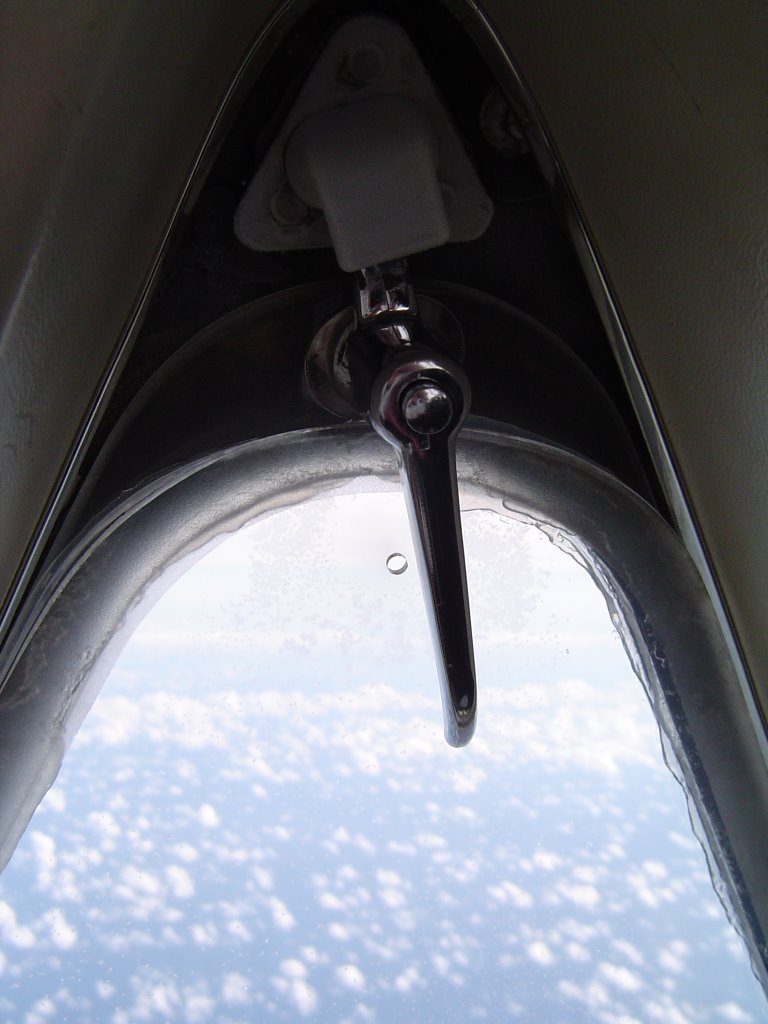
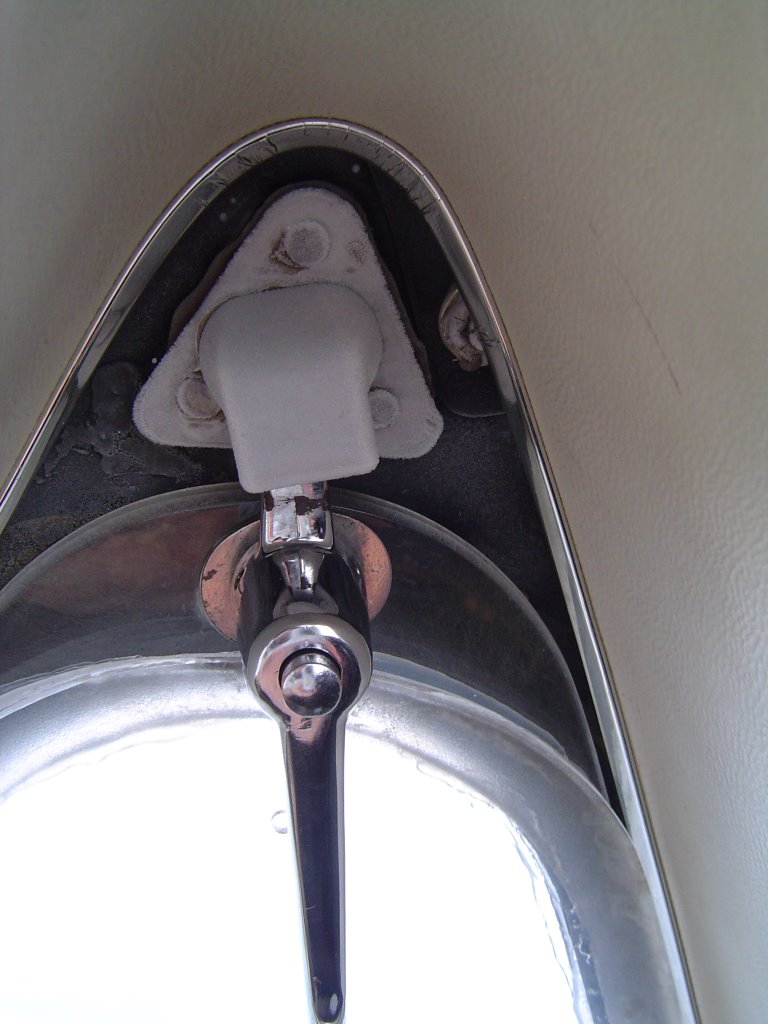
During this tour we spent a lot of time taking people to and from Florida from the New York and New Jersey area. After a little while flying up at altitude, our window starts to show frost and ice!


Why is that? You would think, wouldn't you, that the higher you get in the sky, the closer you are to the sun... so warmer, right? Actually the reverse is true, and it's called the environmental lapse rate. The environmental lapse rate (ELR), is the actual change of temperature with altitude of the stationary atmosphere at a specific time and specific location. The ELR at a given place varies from day to day and even during each day. As an average the International Civil Aviation Organisation (ICAO) defines an international standard atmosphere with a temperature lapse rate of 6.5 °C per km (3.57 °F/1000 ft or 1.99°C/1000 ft) from sea level to 11 km. See Wikipedia for more information.

They are talking about the first level of the atmosphere, the troposhere. The envelope of gas surrounding the Earth changes from the ground up. Five distinct layers have been identified using thermal characteristics (temperature changes), chemical composition, movement, and density. Can you name them?


Troposphere
The troposphere begins at the Earth's surface and extends up to 4-12 miles (6-20 km) high. This is where we live. As the gases in this layer decrease with height, the air become thinner. Therefore, the temperature in the troposphere also decreases with height. As you climb higher, the temperature drops from about 62°F (17°C) to -60°F (-51°C). Almost all weather occurs in this region. The height of the troposphere varies from the equator to the poles. At the equator it is around 11-12 miles (18-20 km) high, at 50°N and 50°S, 5½ miles and at the poles just under four miles high. For more information, click here.

Monday, December 25, 2006

MERRY CHRISTMAS!


Yea! Finally back on the road flying, unfortunately a lot of early mornings and long days.

Next survey question:

Based on your background and experience, where would you like to see MORE of a Girls With Wings presence?

Response in Percent, followed by Response Total

Aviation Conventions and Expos. 60% 39
Schools and Educational Forums. 86.2% 56
Online, in website development. 52.3% 34
Airport Giftshops and other stores. 73.8% 48
Other (please specify). 15.4% 10

1. Dovetail programs into Women In Aviation and 99's to show a link to future adult female info and links.
2. games games games
3. i want to join airforce as gd pilot i have lost my chance but still i mcrazy about airforce and aircraft
4. ACTUALLY FLYING!!!!!!!!!!!!!!
5. Any where to get exposure. How about a display in airport restaurants?
6. Aviation Museums
7. Magazines, like Flight Training, AOPA Pilot, as well as more "mainstream" like magazines oriented to teens. Also, working with something like the American Girl dolls.
8. Aviation Museums! There are many around the country, and they almost always have gift shops. I know one in Owls Head, Maine, that's a Transportation Museum and well-visited. It has lots of old planes, and a great gift shop with aviation stuff for boys and hardly anything for girls. I'd like to see your stuff there. Could you get your stuff into the Air Force Academy gift shop in Colo. Springs, CO.? Of course, Denver International Airport (DIA) is a must.
9. Schools (Magnet possibly) where there is an afterschool program, perhaps, such as the Spanish Club or Key Club, there can be a future pilots club which provides field trips to aviation museums, guest speakers and tours of military airfields where the girls can climb all over different kinds of aircraft and get the "feel" of what it would be like to work around them. Also, planned trips to airshows!
10. Visual media

Total Respondents 65


Next post, I'll talk about how cold it is up at altitude!

Thursday, December 21, 2006


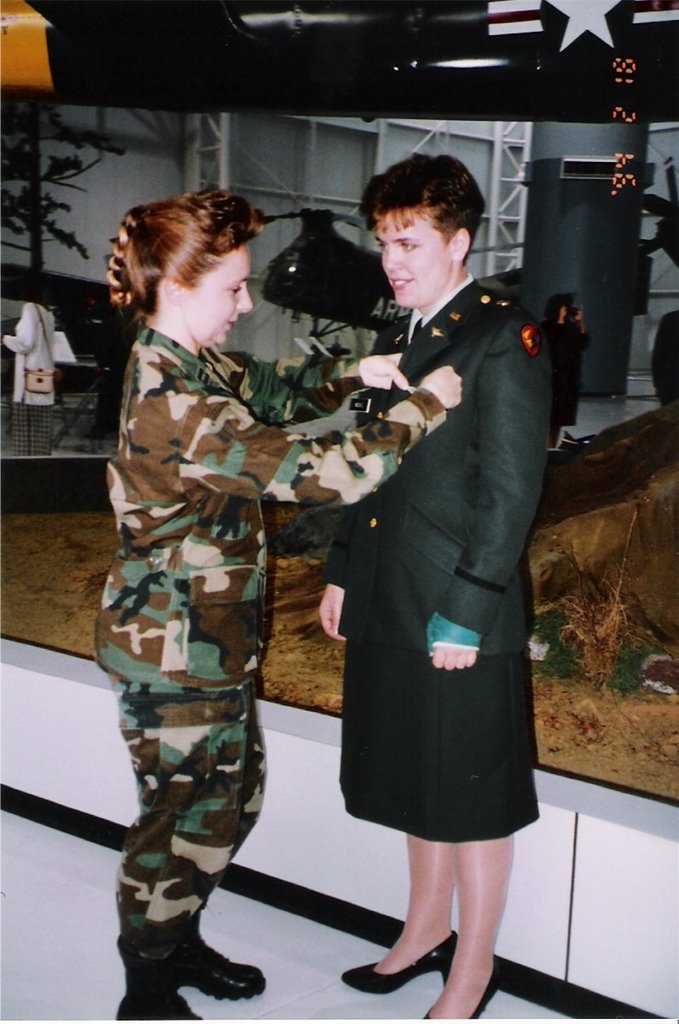
Pinning on my wings.


Next Question: Based on your background and experience, where would you like to see MORE of a Girls With Wings presence?


Response Aviation Conventions and Expos. Percent Response 60% Total 39
Schools and Educational Forums. 86.2% 56
Online, in website development. 52.3% 34
Airport Giftshops and other stores. 73.8% 48
Other (please specify). 15.4% 10

Based on your background and experience, where would you like to see MORE of a Girls With Wings presence?

1. Dovetail programs into Women In Aviation and 99's to show a link to future adult female info and links.
2. games games games
3. i want to join airforce as gd pilot i have lost my chance but still i mcrazy about airforce and aircraft
4. ACTUALLY FLYING!!!!!!!!!!!!!!
5. Any where to get exposure. How about a display in airport restaurants?
6. Aviation Museums
7. Magazines, like Flight Training, AOPA Pilot, as well as more "mainstream" like magazines oriented to teens. Also, working with something like the American Girl dolls.
8. Aviation Museums! There are many around the country, and they almost always have gift shops. I know one in Owls Head, Maine, that's a Transportation Museum and well-visited. It has lots of old planes, and a great gift shop with aviation stuff for boys and hardly anything for girls. I'd like to see your stuff there. Could you get your stuff into the Air Force Academy gift shop in Colo. Springs, CO.? Of course, Denver International Airport (DIA) is a must.
9. Schools (Magnet possibly) where there is an afterschool program, perhaps, such as the Spanish Club or Key Club, there can be a future pilots club which provides field trips to aviation museums, guest speakers and tours of military airfields where the girls can climb all over different kinds of aircraft and get the "feel" of what it would be like to work around them. Also, planned trips to airshows!
10. Visual media

Total Respondents 65 (skipped this question) 53

Tuesday, December 19, 2006


Next survey question: Demographic Information

Please tell us a few things about yourself (the person who most often visits the GWW website). Category is followed by percent who answered the question, followed by number of responses total, followed by specific answers given (and my comments in italics if applicable).


Age. 97% 64 Average is 34 years old
(a little older than my target audience... ;o) )

Occupation. 92.4% 61
1. Fire Suppression Flight Team
2. Attorney
3. Naval Flight Officer
4. grandma of future girl w/wings
5. 3-4
6. student
7. RN
8. student & wife of fighter pilot
9. Chief Flight Instructor
10. kindergarten
11. Director of Operations for a small hub airport
12. Master CFI
13. Education Outreach Coordinator
14. Horse Handler
15. Student
16. WSO(Weapon Systems Operator) in F/A-18F
17. student
18. non
19. school
20. student
21. Air Traffic Controller
22. home maker
23. homemaker
24. Student
25. student
26. recruiter
27. pilot
28. pilot- international cargo 747
29. Caseworker
30. Aviation Careers Presenter/Pilot
31. educator
32. self-employed
33. Corporate Pilot
34. pilot
35. hair stylist
36. United States Marine Corps
37. Airline Pilot
38. US Air Force
39. pilot
40. Apache/Longbow Attack Pilot
41. writer
42. former naval aviator, mom of 4
43. Law
44. Ah64-D Longbow Attack Helicopter Pilot
45. student
46. Pilot
47. military instructor pilot
48. Airline Pilot/Writer
49. student
50. regional airline pilot
51. retired
52. Admin. Officer, Aeronautics Div
53. Server/Bartender
54. HS math teacher
55. pilot
56. Flight Instructor/FBO Manager
57. Blackhawk Test Pilot
58. Retired (health care professional)
59. Graphic Designer
60. engineer
61. airline pilot

Gender. 95.5% 63 7 of 63 respondents were men.

Geographical Location. 97% 64

1. Sask. & Ont. CANADA
2. Georgia
3. NAS Pax River
4. Wisconsin
5. fort bragg
6. asia
7. Southern California
8. United Kingdom
9. BC, Canada
10. Idaho, United States
11. California
12. Midwest
13. Gillespie Field, El Cajon, Ca.
14. Phoenix, AZ
15. IL
16. Minnesota, USA
17. Southern California
18. maryland
19. husdon Mi
20. orlando florida
21. United States
22. Iowa
23. FL
24. usa
25. winchester kentucky
26. Eastlake, Ohio
27. Evergreen, Colorado
28. NY
29. NW
30. Pacific Northwest USA
31. Southeast USA
32. Central Missouri
33. Michigan
34. ohio
35. Colorado
36. Texas
37. North East
38. north west Wa
39. Rome, Italy
40. AZ
41. Omaha, NE
42. Arizona
43. Germany/Afghanistan
44. MN
45. Mid- South
46. South
47. Ft. Rucker, AL
48. northeast
49. Denver
50. Iraq
51. Michigan
52. cleveland,oh
53. ATL
54. florida
55. NASA GRC, Cleveland, OH
56. Lakewood
57. Kansas
58. southeast
59. Howell, MI
60. Tennessee
61. Northern California
62. Connecticut, USA
63. texas
64. Seattle, WA

Total Respondents 66 (skipped this question, 52)

Again, thanks to all who responded!

Monday, December 18, 2006

This Survey question required a bit of thinking...

The following features may be added to Girls With Wings in the near future. Please rate the importance of the following features.

First number is a precentage of people in each category, second number in parenthesis is the actual number of people who chose this answer. I put in bold the winning category for each question. My comments follow in italics.

Coloring Pages
Very Important 24% (17) Important 28% (20) Somewhat Important 39% (28) Not Important 8% (6) Response Total 71
Coloring pages can be found here.

Ability to fill in and print a "Future Pilot" License.
Very Important 34% (24) Important 39% (28) Somewhat Important 18% (13) Not Important 8% (6) Response Total 71
I am working on having a Girls With Wings club that will incorporate this idea. It is a very large project that has to be contracted out to a studio (beyond my abilities). Please be patient while I raise funds!

Interactive Games
Very Important 41% (29) Important 36% (25) Somewhat Important 17% (12) Not Important 6% (4) Response Total 70
Please visit the fun page to see the game.

A BLOG (Web-based journal).
Very Important 24% (16) Important 32% (22) Somewhat Important 38% (26) Not Important 6% (4) Response Total 68
Well, you found it!

Downloadable Screensavers or Animations.
Very Important 24% (17) Important 31% (22) Somewhat Important 34% (24) Not Important 10% (7) Response Total 70
Please visit the fun page to see the screensavers.

Ability to coordinate for Pilot Speaker/Presentions at Educational Forums.
Very Important 46% (32) Important 40% (28) Somewhat Important 11% (8) Not Important 3% (2) Response Total 70
I've been attempting to get people to sign up on either the Girls With Wings forum or the Generate LIFT forum. You can also contact the women via the bios page, or contact me directly and I will search my contact list to help find a speaker.

Introductions to Pilot Mentors.
Very Important 69% (49) Important 17% (12) Somewhat Important 13% (9) Not Important 1% (1) Response Total 71
See above comments.

A Message Board.
Very Important 34% (24) Important 48% (34) Somewhat Important 17% (12) Not Important 1% (1) Response Total 71
Same.

Ability to purchase items over the phone or fax.
Very Important 21% (15) Important 32% (23) Somewhat Important 31% (22) Not Important 15% (11) Response Total 71
Feel free to use the phone numbers on the website to contact me if you are not comfortable with eBay and Paypal. 216.577.6131.

Information on other Aviation Careers.
Very Important 70% (49) Important 17% (12) Somewhat Important 11% (8) Not Important 1% (1) Response Total 70
The bios page is a huge success. I just need more bios!

Total Respondents 73 (skipped this question) 45

Friday, December 15, 2006


In response to yesterday's post, I received this email:

comments = Hi, I'm 7 and I think your site is already good, but to make it more interesting I think you should make more games.

I completely agree! We are working on it... Unfortunately, I can't make the games, and so I have to hire someone to do them for me. I am devoting everything right now to Penelope Pilot. I have seen a picture of the prototype doll, so just know she is on her way. I'm getting there!


Another survey question:
How do you rate the usability and appeal of the Girls With Wings website as a destination for the young girls you know? What changes do you feel are essential?

1. Excellent resource with young girls ability to connect via computer access. Keep updating...old dates and info turn off potential candidates since they want a reliable source of info on a regular basis.

My response: this is why I am hoping more people will post on the message board. I am a one woman show here and there are a lot of behind the scenes work to be done. I am always looking for volunteers, if you're interested!

2. I like it
3. GREAT WEBSITE!
4. good
5. i don't know
6. i think now a days we saw that a girl is facing very difficulties in armed forces specialy in us armed forces they raped by there officers and coligue in my opionen girls should not come in armed forces
7. First visit so it takes a while to load at 56k modem speed.
8. I think that this is a great website it attracts young girls WHO WANT TO BE PILOTS to come on too!
9. For my daugther, more interactive games.
10. Instilling in young girls that an aviation career is attainable, no matter what anyone may say
11. This is my first visit, but not my last. I will also visit your other web sites. I am very impressed and very interested in what you are doing for young girls. I have written a bio and will submit in a few minutes.
12. It is very cute and interactive I would give it a 10
13. I bought a toe ring from the Girls with Wings store at Airventure, it broke, I'm very disappointed about this.

My response: As I say on my eBay store listings, I take customer service very seriously. I need my customers to be repeat customers and to tell their friends to buy merchandise (or we won't get any more games...) Please contact me for a replacement.

14. geared to much toward very little kids not to the ones actually on their way to get their license.

My response: My focus with Girls With Wings is to appeal to those little girls that instinctively are interested in aviation (airplanes, helicopters, space, etc.) that can't find resources appropriate to their age range. My intent is to broaden the age range as I grow. The female aviation enthusiast bios, at least, can appeal to all ages, and the email links will help you get in touch with women interested in assisting others on the way to getting their license. Again, feel free to post questions or comments on the message board and we will be able to facilitate dialogue there. ALSO, I do try to direct women old enough to get their license to resources more appropriate, like Women in Aviation, International, and the Ninety Nines, etc. We are all working together to make the future of women in aviation brighter!

15. its ok
16. none
17. Good
18. dont know first time here.
19. very good
20. My 9yr old loves it! Possibly more interactive activites related to aviation?
21. It's great! I think the coloring section is fun (even though I know it took a lot of time/money).
22. I think its a very fun website but it doesnt necassarily inspire young girls to become pilots. maybe if you told them what flying was like.

My response: I'm working on this. Please! Ladies who are submitting bios, include this information. Or post on the message board. Also, if I weren't on standby at work so much, I'd be including more information about my flying activities! (But working less on Girls With Wings, so it's a balance ;o) )

23. First visit - so I will have to get back with you on that. :) So far it is great!
24. Navigates well. Graphics and colors work.
25. Very easy to use. I like it as it stands, but for a more sophisticated computer user, there might be other ideas. I am still learning to navigate websites from my daughters!
26. It's a good website. I tried to enlarge the Kids'Page and/or enlarge one of the images so that I could send them to a child for coloring. But I was unable to enlarge a single image. I wanted to print out all of them individually but was unable to do so. the website is colorful and fun!

My response: I believe I fixed this after I read this comment. If anyone is having problems, please email.

27. I think it would be neat if you could link future girls with wings to women who are already flying. I like all of your ideas listed in 4. also!
28. Young, fun and creative. The site will attract many young girls.
29. good unknown
30. good
31. Still can't open the website. Perhaps I should redo this questionaire a second time after I have a chance to "see" the website.
32. I think that my daughter (at 2 1/2) would love to get on your website to play games or to download coloring materials. It would be great to also use the website to discover how to pursue a career in aviation. I love the Bios. It would be nice to transfer the motivation into something that would change lives. I could see mentoring as a great way to spread the word and change lives.
33. I think it is a very appealing site for young girls. I would have to spend more time looking at all aspects of the site before I could recommend changes.
34. well i think its a great site but if had a little games of flying and stuff
35. Newsletter improving with each issue. Good mix of photos and interest stories. Should appeal to young girls - not too long to read through. Some of the features in #4 below may be worthwhile "if" newsletter is being marketed to young audience, i.e. girl scouts, schools, etc.?
36. A+. Just keep doing a great job!
37. content. content. content. A good goal for a website such is your Lynda, would be to put twice as much usable content (ie: research of famous female pilots, how to get into flying clubs, civil defense info, etc.) as you do fun stuff like the pics and store.

My response: This is a great idea. I think that since these are things being done on other websites, I would rather link to them and spend time on doing the innovative! There can be a lot more intellectual content in the future, but I want to get the basics down before I broaden my focus too much.

38. I don't really know any young girls (other than my 3 mos old daughter) well enough to say. Sorry!!
39. some of the pages are cluttered with several images; i can imagine that it might be overwhelming for some kids.
40. Don't know any young girls who visit it yet

Again, thanks for everyone's input. I take comfort in the fact that the majority of the comments were positive. Don't hesitate to share with me your comments via the forum (since the survey is closed).

Have a great day!

Thursday, December 14, 2006

The next question on the survey was the following:


How often do you visit the Girls With Wings and/or the Very Important Pilots Websites? Select one answer for each item.


Girls With Wings Website

This is my first visit. 68% (80)
At least once a week. 5% (6)
Once a month. 9% (10)
Bi-monthly, coincident with newsletter. 9% (11) (Note: the newsletter originally came out every other month.)
Less often (but more than once). 9% (10)
Response Total: 117

Very Important Pilots Website:
This is my first visit. 66% (57)
At least once a week. 2% (2)
Once a month. 7% (6)
Bi-monthly, coincident with newsletter. 10% (9)
Less often (but more than once). 15% (13)
Response Total 87

Any other Women in Aviation Related Websites
This is my first visit. 25% (23)
At least once a week. 20% (18)
Once a month. 19% (17)
Bi-monthly, coincident with newsletter. 7% (6)
Less often (but more than once). 30% (27)
Response Total 91

Total Respondents 118

I would like to add more games to the website to encourage more children to the website, since the new bios seem to be what brings the older visitors. Of course, this costs money, and I am still working on bringing it in!

Feel free to add your comments to these questions at any time. What would keep you coming back to the website?
Thanks!

Saturday, December 09, 2006

Hi all,

I'm going to start posting the results of 2005-6's survey about Girls With Wings. Hopefully I can answer to some issues that were brought up and all of you can help me redirect Girls With Wings to make it as successful as it can be! Below you will also find some links to websites that support GWW and that GWW supports.
Thanks for your interest.

First question, and easy one on Site Familiarity.

1. How did you FIRST hear about Girls With Wings?

Responses
Saw a Brochure in an FBO (General Aviation Facility). 0.9%
Received the Newsletter from a Friend. 12%
Search Engine. 6%
Referral/Link from another site. 16.2%
Visited the Exhibit at the Women in Aviation Conference. 7.7%
Elsewhere (broken out below). 57.3%

1. saw article on Lynda Meeks in AOPA Flight Training mag (found at http://flighttraining.aopa.org/ft_magazine/fullstory.cfm?id=5742&issue_title=September)
2. AOPA Flight Training Magazine
3. A friend of mine, Kandi Horton, thought I would be interested in checking out the website.
4. A friend told me about it and emailed me the link.
5. Ask Captain Lim's website (I'll have to take this person's word for it, I can't find a link to GWW)
6. September 2006 Flight Training Magazine
7. on google.
8. i saw advertisement in newspaper that pakistan airforce are recruting female GD pilot in pakistan airforce so i m very shocked to listen this news
9. AOPA Pilot magazine
10. AOPA Flight Training Magazine
11. read about it in Flight Training magazine
12. AOPA Flight Training Magazine
13. AOPA Flight Training article
14. 99 meeting
15. website was forwarded to my from my father
16. aopa "flight Training" magazine
17. Propwash internet mail (again, can't find the mention)
18. Why we Fly - Moment of truth. Lynda Meeks' story in Flight Training Magazine
19. AOPA Flight Training magazine
20. Oshkosh WI Airventure (We'll be here next year, too!)
21. the 2006 Airventure in Oshkosh, WI.
22. Flight Training Magazine Article
23. I met the President, Lynda Meeks, at an airport while walking to my aircraft on a cross-country stop-over.
24. from a magazine article
25. AOPA Flight Training
26. AOPA Magazine
27. Ebay Items (http://www.girlswithwings.com/store1.html)
28. AOPA flight training magazine
29. Aopa Flight Training Mag
30. my mom told me
31. AOPA Flight Training
32. AOPA article about Lynda Meeks
33. AOPA Flight Training magazine
34. Oshkosh booth
35. 99s e-mail network (An international organization of women pilots founded in 1929.)
36. oshkosh airshow
37. received a gift (girls with wings t shirt)
38. Visited the booth at EAA Air Venture 2006.
39. ebay.com
40. From my wonderful friend Lynda!
41. parent told me about it
42. link from a friend
43. ANN-aero news network (http://www.aero-news.net/Community/DiscussTopic.cfm?TopicID=2952&Refresh=1)
44. aero news website
45. referred by one of your women pilots involved with GWW.
46. eBay
47. 99s listserv
48. eBay
49. Referral from brother
50. Pro 99s
51. dont really remember, mabe the Pro99s listserve?
52. my mom flies site (http://www.mymomflies.com/)
53. Ebay-looking for "girls" flight clothing.
54. My LTC forwarded an email referring to this organization with previous senders to include Kathleen M. Meilahn American University, Washington, DC Master of International Service Candidate. I have just now tried to open the website to check it out but the page and the newsletter are not opening at present. Will continue to try.
55. Flight Instructor
56. My dear friend - Lynda Meeks
57. I was introduced to this site while writing a book about 9/11. (Lynn Spencer's Book, Clear the Skies, about the effect the events of 9/11 had on the aviation industry)
58. From Linda first email
59. through the 99's pro pilot listserv
60. I can't remember!
61. You :)
62. 99s Group
63. At the Lake Erie 99s meeting
64. Through the 99s blog.
65. I designed the first website!
66. Saw a reference to it on the Pro 99s email listserv.
67. Heard about it from UAL Capt. Meryl Getline (http://fromthecockpit.com/)