Wednesday, March 10, 2010

Sharing the dream of flight

We bring you another guest post, this time by Monika Petrillo. Enjoy! I know I did.

Sharing the dream of flight with the next generation By Monika Petrillo info@flyaboutmovie.com

When I was 24, I decided to get a pilot's license. Inspired by that, my father followed suit a year later, getting his license at age 58.

Together, we went on to fly a single-engine plane around the continent of Australia, a journey I documented with my film "FLYABOUT" which has been showing at AirVenture in Oshkosh for the past two years.

For those of you who haven't seen the film, let me tell you that the relationship between my father and me became one of the main challenges on that journey. The unavoidable "switch of generations" plays an important role in the movie.

I'm happy to add that my father and I have safely made it to "the other side". But it wasn't easy. Now, eleven years later, I have two children myself. With all the "Flyabout" screenings in the past months, they have become aware of the fact that their mommy is a pilot, and my six-year-old daughter is now constantly begging me to take her up in a plane.

I wasn’t quite sure when I would be ready. And then I heard about this worldwide record-setting event in celebration of the 100 year anniversary of the first woman pilot. The goal was to introduce as many women as possible to aviation in one single day. As soon as I learned about this fantastic idea, I knew: This was the time to pass on my dream of flying to my own daughter.

I ended up introducing a total of three "women" to flying today. Two of them were six years old and VERY excited about the experience of flying in a small airplane over their own house, school and past the Hollywood sign. But they were probably most excited when I handed them their certificate and told them that they had just contributed to setting the "World Record of Most Women Introduced To Flying In A Single Day".

When I asked them what their favorite part was about the flight, my daughter’s friend said: "The landing!". My own daughter smiled and said: "The moment when the plane went up and then down. That felt a little bit like being in a roller coaster."

My own favorite part? - Finally being able to share my dream of flying with my daughter.

… And who knows, maybe in another few years, my daughter and I will circumnavigate Africa together and produce the sequel to “Flyabout”.

Thanks, Monika, for your guest post! I'd like to emphasize three things in her post. 1st, Flyabout is an amazing film and I cannot say enough good things about it. I thoroughly enjoyed it, as did my 6 year old niece. Yes, six years old. If anyone can get a six year old to watch a beautiful, educational and inspiring hour-plus long documentary, it's Monika. It is available for sale on her website, as well as the Girls With Wings store. Which brings me to point number two. If you like her daughter's tee, that is also available in the GWW store.

Thirdly, the event Monika refers to is still going on! To celebrate the Centennial of Licensed Women Pilots and Women’s Day, women pilots from around the world will attempt to set a new worldwide flying record: the most women introduced to flying by women pilots in one single day, March 8, and in one single week, March 6 to March 12. Visit their website for more information.

Tuesday, March 09, 2010

Air Racing: by guest contributor, Linda Street-Ely

Intro from Lynda: I've gotten quite a few questions about Air Racing and I usually have to respond "I don't know. Let me go check Wikipedia...." Of course, this completely disregards the wealth of information within the Girls With Wings community. For example, I met a Air Racing aficionado at last year's Air Race Classic and I thought she might be willing to do a guest post for the GWW blog. I was right. So here is her post. I know I'll learn a lot!

Air Racing
By guest contributor, Linda Street-Ely

Eight years after my grandfather’s third place finish in the Indy 500 (he is pictured at left), twenty chick pilots with a sense of adventure challenged each other in what was dubbed the “First Women’s Air Derby,” and became affectionately known as the “Powder Puff Derby” when Will Rogers saw lady pilots powdering their collective noses prior to starting up the props.

Taking off from Santa Monica, California, they raced their fabulous flying machines to the site of the National Air Races in Cleveland, Ohio. The year was 1929 and the races continued each year until WWII, when both Indy and the Women’s Air Derby were put on hold. Post-war, the name was changed to “All Women’s Transcontinental Air Race.” Today’s Air Race Classic picked up after AWTAR was discontinued in 1977, continuing that traditional transcontinental speed competition.

Air Race Classic, Inc., is a non-profit 501(c)(3) organization with a purpose to ignite that spirit of competition and camaraderie that is a boon to aviation. The race tends to spur dreamers on to pursue personal goals. The general public is drawn to the cities participating in the start, fuel stops, and finish, as well as home towns of pilots. Many people join the excitement through sponsorship, ground-air assistance, timing and officiating, and as spectators and supporters. Overall, each summer brings the spirit of the race to advance aviation through education, competition, careers, and fun.

Teams work with weather, aircraft performance at different altitudes, and air traffic conditions. They spend hours pouring over charts and weather forecasts to formulate race strategies. Even though there is competitiveness, there is a strong sense of camaraderie among racers. Pre- and post-race activities develop strong bonds of friendship and respect. Safety is always a priority.

In my first cross-country air race, 2008, 34 teams were given four days to complete a route approximately 2,400 miles starting in Bozeman, Montana and ending in Mansfield, Massachusetts. While it used to be that the fastest airplane won the race, now all airplanes are handicapped – meaning each plane is flying against its own target speed, so every entry has an equal chance of victory. Handicapping encourages competitors to play the elements; weather, winds, etc. Flying is restricted to Visual Flight Rules conditions in daylight hours only, but at least one of the two pilots on each team must have either an Instrument Rating or 500 hours as Pilot in Command. This race is open to female pilots, and airplanes from 145 to 600 horsepower.

Each of the eight race legs, between 280-320 miles, is timed and with handicapping that means that it’s possible for the last arrival to be the winner. Reaching each leg, the pilots must fly by a timer and then either land or continue on in the next leg.

Transcontinental air racing requires endurance and patience. Waiting out bad weather (we had plenty of that), choosing the best time of day and altitude to fly each leg of the race to find the optimal atmospheric conditions, i.e., best tailwinds or least head winds, trying to stay on course with not even a degree of change in the heading, presented challenges to staying focused while encouraging that part of me that is persistent and competitive.

My 2008 teammate, Caroline Baldwin, and I placed 18th in her airplane, a Piper Cherokee 180. Not what we hoped for, but we incurred no penalties, did not have to deviate for weather, had a positive score on each leg, and finished the race without being disqualified. I learned how to do a fly-by for a timer and how to build a race strategy. I met some incredible women, some who fly professionally, or are retired professional pilots, others who do this for fun; a song-writer, a few engineers, a retired federal judge, a farmer, a few teachers, and many more with interesting backgrounds. Every racer was treated to the most hospitable, friendly folks in every town where the race touched down.

Caroline and I received a “Leg Prize” which is awarded to racers with the three fastest times for each leg of the race. We earned the third-place prize on that last leg into Mansfield. Most importantly, we had a fun and safe race.

What could we have done differently to place higher? Well I thought of a few things. There are areas in the atmosphere where one may find the optimum tailwind, and knowing how to find that takes some practice. I think I was finally getting it toward the end of the race. Flying straight is important too. Drifting off course by just one degree means you will have to adjust later to get back on course and just one degree can cost valuable seconds. It takes a lot of concentration to fly a consistent heading, and when the wind isn’t a perfect tailwind, when it’s a quartering tailwind, coming from an angle behind us right or left, a certain amount of it is a crosswind, keeping a heading is difficult while we’re being blown in the direction of the wind. Another factor was that the cowling on Caroline’s airplane didn’t rest exactly aerodynamically symmetrical atop the engine, undoubtedly, that cost us airspeed by creating more drag on the airframe.

Just knowing this air race is something not many people have done, even those with extensive aviation backgrounds, the challenge that it offers, is enticing. My mom and my husband were two of our biggest fans. Mom had team t-shirts made for us and my husband, Mike, was there at the finish line in Mansfield, cheering us on to that final timing line and for all the celebration and activities over the next two days. I had become a veteran of air racing, another Air Race Classic in the history books, and I had the fresh perspective of a new racer, already looking forward to 2009.

I raced again in 2009, with race partner Jodie Perry, of Austin, Texas. We finished 17th in Jodie’s Piper Archer. This year will be the first year I will race my own airplane, a Grumman Cheetah (pictured at right), and the first race for my race partner, Dr. Elizabeth Kummer, of Dallas. We are truly excited about the adventures that await, and are honored to be flying in support of CaringBridge.org, a wonderful non-profit organization that helps families and friends of ill people keep in touch during the most difficult times by providing a free personal website.

Photos and articles from around the country are posted on the Air Race Classic web site: www.airraceclassic.org, along with the 2010 route: Fort Meyers, Florida to Frederick, Maryland. Our team blog will be at www.TeamEly-Kummer.blogspot.com. We hope you’ll check in during the race and cheer on all the racers to an exciting and fun finish.

Wishing Linda and all of the racers a fabulous time this year. I raced last year but not this year, though I intend to be at the terminus to see them all arrive safely. Please let me know if you have a special area of interest - so you can do a guest post on the GWW blog too! - Lynda

Saturday, March 06, 2010

Be a GWW Crewmember!

Did you know you can show your support for Girls With Wings by joining our crew? No, you can't log flight time with us, but it's a great way to climb on board to join others whose dreams are taking flight.

Currently we have nearly 300 registered members, which allows us to track how many people we're reaching with GWW. Trust me, grant applications want to know what kind of reach we have. There are three levels of support, Support/Flight/ATC Crewmember, all defined on our website page here. All three levels get you a membership card and signed up for our monthly newsletter (latest issue here).

Support Crewmember is free, and the Flight Crewmember level is only $12/year - but it comes with a 10% discount code for use in our GWW online pilot shop. The Flight Crewmembers also receive either a pink or purple luggage handle wrap. Trust me, when you unload with a bunch of flight crews off the hotel shuttle, none of the guys are going to mistake your bag for theirs. It also makes your bags a lot more comfortable to carry.

The highest level of support for GWW is our ATC Crewmember. Air Traffic Control Crew is the membership option for families, companies, or other organizations to show their support for the mission of Girls With Wings. ATC's responsibility in the aviation world is to ensure safety, organize and expedite the flow of traffic, and to provide information and other support for pilots. The ability to offer these services for our Girls With Wings is $50 per year - and every cent of this payment will go to the scholarship fund. You will be specifically recognized in conjunction with the annual scholarship award detailed here. In addition, you will receive a letter of appreciation, newsletter registration AND 10% discount in the GWW online store. You will also receive a free Girls With Wings license plate frame! That is going to make your car look GOoood.

So why is this so important? Lynda, why you gotta take my time trying to sell me a membership??

Because on the application form I have people fill out a block for "How do you support the Girls With Wings Flight Plan?" I get such great answers, like:

This website took my breath away =] I only wish i knew about it earlier. I'm an aspiring 18 year old student pilot and i hope this website can help me as well as vice versa!

and

I think that the Flight Plan Girls With Wings created is a great way to spread the word about flying made available for everyone. I am only a high school sophomore and if I had known about the chance to fly earlier, it would have made me even more excited and ready to fly by the time I come of age. I hope that as I grow older, I can help show other young girls that they can have the same opportunities as I will be having in the near future. Hopefully more girls will know about flying and the number of girls who actually do fly and not just the boys who fly.

And this woman who signed up just recently:
Well, I actually only heard about this website a couple of days ago. I work at an FBO and a pilot came in and asked if I knew any little girls who would be interested in flying. I told him that I have a six year old daughter and he gave me the flyer and two little tattoos for her. He also showed me the picture of his granddaughter in the flyer. I thought that was really neat. I thought what he was doing was great, giving out flyers and letting people know about the website. So since I work at an FBO and have access to a lot of pilots and passengers coming through, I am going to hand out flyers and let them know about the website. This is going to be how I support the flight plan and let other little girls know that this is out there. If that man had never let me know, my daughter would be missing out on all of this.

So here's a picture of the flyer and the said granddaughter. Of course I knew exactly who this was. The guy's been one of my greatest supporters from day one. So I wrote him an email to ask him. Just to be sure. Because there are a lot of guys out there that do plug Girls With Wings. He has sent tons of pictures of Jaime, Jhennifer and Faith (and Connor!) for me to use on the website and brochures. I see him every year at the Oshkosh booth, but unfortunately rarely get a break to catch up with them.


He is currently on a trip in their Debonair with his wife from Canada to the southern U.S. as an early opportunity to thaw out a bit. Here's his response:

Hi Lynda;

Thanks so much for forwarding that letter from the FBO girl in Brunswick GA. She was very interested in your efforts to make little girls aware of their potential in aviation & technology & I think she will introduce her daughter to flying now. It continues to amaze me that even folks that already have a connection with flying don't think to get the girls involved.

I stick a brochure on every airport 'cork board' I stumble on & talk to 'flying people' about your efforts. They're always intrigued, especially women who have girls in their family. We'll continue passing along 'the word.'

Here's our surrogate grandchild - Pink Mouse keeping an eye on the receding snow-line passing Pellee Point on the way here.

Cheers, Mike

So there you go - everything ties in. YOU can show support for Girls With Wings with your membership. You can can also spread "the word" for GWW wherever you are, no matter your experience, location or gender. What's not to like? So sign up for your own membership here, and order brochures to hand out here. *We* still have a lot of work to do, getting our message out to all the young ladies. Please help!

Monday, March 01, 2010

Dealing with Downsizing

Ugh. I had this GREAT tie in for a blog entry and it's completely gone south. Forgive me for having a weak link here, won't you?, because I'm going to do it anyway.

So, as a follow on to the Women in Aviation Conference... I was on a panel regarding "Dealing with Downsizing," moderated by Girls With Wings Role Model Laurence (yes, that's a girl's name in France, where she's from).

2:50 pm - 3:40 pm Dealing with Downsizing: Laurence Bonneau - Moderator, Panel - Evelyne Tinkl, Donna Miller, Rebecca Hempel, Jenna Cohrs (Yucatan 3)

Furloughs, layoffs, downsizing…what would you do? Come and interact with outstanding women who have survived it all. Learn from their experiences, and come away a better prepared aviation professional.

No, I'm not on the listing - I was appearing in place of Jenna, who had gotten a job (yea!), representing the recently furloughed (as of January 15th - whereas some of the women had been furloughed at least a couple of years). My angle was that I spoke a lot about my furlough (by definition a temporary layoff) being an opportunity to concentrate more on developing Girls With Wings - as I blogged about previously. I frankly have been so busy in the month since my furlough that I hadn't had time to even think about being unemployed. I wrote Laurence an email the next morning saying "you owe me a night's sleep" because it wasn't til she interviewed me that I realized that I was really in fact sans paycheck. I spent all night making a list of ways to pay my bills and on top of that continue to fund GWW!

So it was interesting that in a phone conversation the next day (the implications of which will soon be announced) that someone mentioned that the fellow who started the Young Eagles program was a furloughed US Airways pilot. It turns out I could get zero confirmation of this. Even the YE office would only say it was a program started by EAA - The Experimental Aircraft Association, an international organization of aviation enthusiasts based in Oshkosh, Wisconsin. The home of OSHKOSH! or EAA Airventure, the huge airshow that takes place every year the last week of July. And, yes, GWW is going to have a booth there again this year. Please come on by - it is a blast!

So my tie in was going to be: if a program like the Young Eagles, a program designed to give children between the ages of 8 to 17 a chance to fly in a general aviation airplane free of charge can grow so large in so short a time (launched in 1992 and, by fall of 2009, has flown more than 1.5 million children in 90 countries), then I hope that GWW can see similar growth. I do support the YE program wholeheartedly and in fact give YE brochures to every girl that attends our presentations. We at GWW don't actually give the girls flights, and why would we want to compete with such a successful organization?

So, how about you? Have you participated in any Young Eagles events? As a pilot or other participant?

Sunday, February 28, 2010

Road Trip to WAI Conference

A picture of the Girls With Wings traveling road show....

Pretty impressive, isn't it? An 11 year old car which was badly vandalized (can you see the gouges I can't afford to fix on the hood and down the side where someone took a screwdriver or other tool to the paint? Grr.) towing a simple little trailer filled with marketing materials and items sold to raise funds for the Girls With Wings organization. And no, I have not learned to skillfully back up with a trailer. I usually unhook it and push it to where I need it to be. I am a whiz at many things, but I have my limitations.

I had to bring this up because I want people to know that GWW really is really a philanthropic organization with a limited budget and huge goals! So when I can't negotiate on t-shirt prices or donate money in response to a request that is why. My top priorities are our outreach programs and scholarship funds, so a fancy rig is going to have to wait.

So despite the cross country drive (North to South, that is), I just have to attend the Women in Aviation conference every year, and this was in Orlando, FL. To save on my expenses (I made the mistake ONCE of using the logistics company to ship my supplies - which were lost, damaged and cost me a small fortune), I decided to road trip it down from Cleveland. This 21st Annual WAI conference is my 5th having a booth for Girls With Wings. I LOVE going to aviation conferences and attending WAI is a no brainer for a trip. This is where I find the women in aviation who act as role models to inspire girls to achieve their full potential. If that sounds like it'd be a good mission statement for GWW, it's because it is!

It is always such a charge to talk to people about GWW; either people have heard about us and are so excited to meet us in person, or they’ve purchased something from the store and just love telling a story about a reaction they got from someone, or they HAVEN’T heard of us and are so enthusiastic about their support for our mission. Whatever the interaction, it’s usually overwhelming positive. [I had only had one negative experience and that is when a woman came to the booth and demanded to be able to buy a pink lanyard. When I couldn’t produce one, she was mad. No kidding.]

I have a wonderful group of people helping me out again this year. Lindsey, the head of the Minnesota Club of Girls With Wings is here all weekend and helped to present our seminar “Attracting Kids to Aviation” in conjunction with Youth Aviation Adventure. We had a GREAT showing for this presentation, which just goes to show there is so much interest in people spreading a passion for aviation. Thanks to Steve and Dan for suggesting and coordinating the presentation. Their "seminar in a box" allows folks to put on an airport day for kids with tips and techniques for the smallest effort and the greatest success. It was insightful to compare and contrast our programs to give people ideas on how to start their own outreach program.

Also helping with the booth was Mikel, a tweeple I found via Twitter and also assisted me with the AOPA conference last year because she lives in Tampa. Sometimes I bring the whole kit and caboodle to a show; sometimes, I mail about five boxes to someone in the area and I set up a pretty sparse display. It works, but it’s not as fancy. If I do bring the trailer (like to Oshkosh) I unload the trailer with a handy dolly that turns into a cart. There’s no avoiding this step. I so envy organizations that show up the morning of an event because they have slick collapsible stands or their company can afford to have the logistics people for these events set it up for them. Some day.

Last year I mailed stuff to and from WAI with the help of a friend Sara. She helped with AOPA as well and now I just can’t keep her away from the booths! I used to fly with her husband at Flight Options and both are so supportive of GWW. As a pilot herself she really gets behind the mission. From left to right, Lindsey, Penelope, me, and Sara.

Amy, the 2008 Scholarship winner, was there with her Dowling College buddies and spent
some time in the booth, as did Brenda, the 2007 scholarship winner. What a great opportunity to meet up with these great girls again. It’s sad when people who applied and didn’t win stop by, but they assure me there’s no hard feelings. I would LOVE to give everyone who applied a scholarship, but we need to sell a heck of a lot more t-shirts for that. And get donations and sponsorships, which is all why we attend these shows to make contacts and get everyone’s support.

It was an invigorating show and I'd like to thank all that stopped by. Please visit the website and/or make comments to the blog with your thoughts. Remember, the GWW merchandise line offers clothing and other items for girls of all ages; the rarely found aircraft themed items designed to let everyone know “Yes, Girls Can Fly!” While some may view one of our products as just a t-shirt, we believe that it is in fact a statement about the potential of girls to be intimately connected with Aviation (and other Science, Technology, Engineering and Mathematics based fields) from the time they are born. We call this STEAM instead of STEM. In order for us to go Full STEAM Ahead, all profits from the aforementioned merchandise are invested in developments to our educational program and scholarships.

Monday, February 22, 2010

FAA Writtens

Hello, all, and sorry for the delay in the post... I've had quite a few people ask me how I did on my FOI written and I said I would post about it. Unfortunately, I took the test on a Wednesday morning (also pitching my resume to the flight school owner, btw) and had to prepare for for the Great Lakes Aviation Conference in Novi, MI. [Special thanks to Pam and Carol for helping with the booth!]. So I didn't post on Thursday before I left.

Unfortunately, on my way out of my house at 6am (I was awaiting sunrise), I went flying -pun intended- down four concrete stairs because of melted snow that had frozen overnight, landing on my left shin with a second point of contact: my face. I seriously considered getting my leg x-rayed to see if I had broken it. Such pain. I am happy to report no broken teeth or split lips.

Luckily it stopped hurting enough for me to be able to stand in the booth for the next couple of days. It didn't help the healing though, and so I am trying to keep it elevated while trying to get caught up with packing for the Women in Aviation Conference today (you can guess how well that's going). I would take a picture of the fireworks display that has erupted on my lower leg, but I will spare those of you with weak stomachs. Tomorrow I begin the 16 some hour drive to FL. Just so I can enjoy the warmer weather longer....

So, about my test. Let me just say that in the interest of time, I prepared for the FOI written by using webexams.com and continuously taking the practice exam over and over again. I had hoped to get all of the writtens done by the end of February but that's clearly not going to happen. I scheduled the FOI written before I could think of an excuse to work on other things and put that off, too.

The actual test is done on a computer in a 'certified location' and is a pretty basic 1983 era looking fifty question test (unlike the 100 question test online). The problem with my doing the online test over and over again is that I had stopped actually reading the answers and had more memorized where the answer was (like the third position). In the actual test, there are the same answers but in different order, so I missed FOUR because I couldn't remember which was the true answer. *blush* Unfortunately, looking at the answers and using the intellect-based method of choosing the answer that makes most SENSE to you doesn't work in the FAA exam.

At least 92 well exceeds the passing minimum grade of 70. Before you even think it, I know: I'm going to have to go back and read the answers that I had just memorized so I will learn from the information in that test.

So in order to set up the test, I received a phone call from my instructor, Tony, telling me I needed to call someone else (not just the flight school) to schedule the exam. Apparently, this test is moderated by a company called Computer Assisted Training Service. The good news is that you can get $10 off for being an EAA member, but instead of being $75 for the test, it's $100! This is the kind of business I need to be in - since this averages $10/min for how long it took me to take the actual test.

I'll be honest, I am learning a lot of new things becoming involved in General Aviation. As we throw around all of the reasons that we think GA is a fading trend and why fewer people get into flying, perhaps we could ask ourselves why on top of all of the other expenses in learning to fly, why a simple computer based test should cost so much. I have three writtens I need to take before I begin my flight training at a total cost of $300! How long does it to take the average person to raise this kind of money? Could this not be a function of the FAA? Certainly they have IT folks over there, and they are responsible for maintaining the test results anyway. It's just one more outrageous cost involved in getting a pilot's license.

So what are your thoughts? Do you agree? Or am I missing something?

Monday, February 15, 2010

Hangar Flying Revisted

This weekend I got about as close to hangar flying as I've ever gotten in my sixteen years as a pilot. If you don't know what hangar flying is, I briefly talk about it here.

Basically, it provides pilots the opportunity to tell "there I was" stories. In the military flight school I think we were too traumatized to relive our experiences. As a military officer and pilot I had too many other duties to be able to sit around and gab. Then I guess we regional airline pilots sat around and told stories, but they were usually tales of woe relating how our bosses were abusing us. As I climbed the ladder of a professional pilot career, I became associated with pilots that didn't want to spend too much time admitting mistakes or ignorance.

So as I face my new life as a furloughed pilot I slide down the chute to the General Aviation ramp (this is not an insult to GA by any means but a clever analogy with which I can use the picture at right) and so I am learning so much from dealing with a new genre of pilots.

Saturday I went to a Civil Air Patrol meeting. CAP is is a Congressionally chartered, federally supported, nonprofit corporation that serves as the official civilian auxiliary of the US Air Force providing such services as Aerospace Education, Cadet Programs and Emergency Services, as well as my intended mission, Pilot Training and Services. The CAP unit I am joining has a Cessna 182 available for flying missions, such as search and rescue and cadet orientation flights.

After the standard meeting tasks, we spent quite a bit of time talking about a thorough pre-takeoff brief in order to be prepared for any contingency (or emergency). The message being if you brief specifics on the ground you will not have to make too many decisions in the air when you're short on runway, altitude and time. You may have to slightly modify your plan if conditions change, but that will be a minor consideration instead of holding a soup sandwich when you should be holding it together.

What was interesting to me was that the flight instructors in the room started offering their tips. Tips that if given during a busy lesson in the airplane might have been forgotten once on solid ground, but were well received and responded to by the other pilots. Folks in the group spoke up with thoughts such as "I've always wondered what would happen if I was trimmed for Vy but... (lost an engine, went full throttle, etc.)?"

The more experienced pilots in the room told them to take the opportunity to go practice these scenarios on their next training flight (albeit at a safe altitude!), so they would be prepared to react when something untoward did happen. For Real.

The reason we brief another pilot (if applicable) before takeoff is to ensure that in an emergency the other pilot isn't doing his own thing - like changing the configuration of the airplane at low altitude and airspeed. This could be fatal. Of course, we can all armchair quarterback such events and say, "we'd never do something so stupid," but such accidents happen repeatedly. According to this AOPA Air Safety Foundations report, takeoff accidents account for 20 percent of the total.
It’s logical that this would be a problem area because there is frequently little altitude or time to solve a problem or to maneuver. Regardless of whether it is a mechanical failure or pilot-induced, time, airspeed and altitude are all in short supply. In any event, it’s essential to have a contingency plan in the event of a power loss at a critical time.
So much as possible, we want our reaction to an emergency to be instinctive. If a pilot has seen the situation before, even just a simulation of the event, the correct response may come a split second earlier, preventing a fatal, uh, conclusion to the flight.

The discussion, btw, was supplemented with videos from The Finer Points of Flying website. One that I found particularly interesting was the "Impossible Turn." [#35] I think it finally hit me that I've been flying airplanes with two engines for so long I've grown to think as the second one being the "spare." An airplane will fly fine on one engine (won't climb as well, though, which is why we must consider our "one engine inoperative climb rates" especially at airports within mountainous terrain), so it's less of an "emergency" than in an airplane with one engine and no spare.

So, this impossible turn involves taking off from an airport, losing an engine, and executing a landing to the runway in the opposite direction (given due consideration to the winds). I've only heard of this happening once, and until it was mentioned here had completely forgotten about it. A Beech 1900 that took off from PIT, where I was based, had a cargo door come open in flight. Those pilots had the presence of mind to execute the turn and land immediately. Ok, totally different scenario, of course, but I'm pretty darn sure that contingency wasn't briefed before takeoff. Kudos to them for their cool heads!

Anyway, if a pilot truly believes it impossible to return to the runway in this manner after an engine failure, you could, as one pilot suggested, go to Google maps before a flight to an unfamiliar airport you can check the satellite view for suitable terrain for an off airport landing. See... I hadn't thought of that!

p.s. For those of you tracking my progression towards CFI, I am taking my FOI written tomorrow. Wish me luck!

Guest blogging

Blogging is a wonderful way to get your message out to a lot of folks in an easier (and less "spammy" way) than sending out emails. I started this blog about "Life on the Road as a Pilot," but I'm less on the road as a pilot now than I am promoting Girls With Wings. Therefore, I am posting about whatever comes my way and I try to get a sense of what people are interested in by the comments they post.

Ok, I used the word "easier" when I talked about blogging, but truth is, it's not all that easy to keep up a blog. For me, anyway. As a reader of my blog you know that I start talking about one thing and digress into a little of my history with it, lessons learned, more resources, whatever, until it's a mile and a half long. With all I have to do with Girls With Wings, it's often a little hard to devote several hours to blogging. I do try though! The other alternative, which is what many bloggers do, is they post very brief entries more often. I just can't do that. Some say I talk too much....

So I've been asking around for contributions to the blog. If you think you have an idea for a blog entry, please let me know and we can bounce ideas off each other. The same way I did with Av8rdan, when he invited me to post an entry on his blog. It took me a while to get around to it (many apologies, Dan), but here it is:

This Girl With Wings Really Knows How to Ramp up the Excitement About Flying!

Enjoy. And I'll be back (eventually).

Wow, look! A brief post. I CAN do it.

Sunday, February 07, 2010

Playing "girl"

This weekend I traveled to Indianapolis to participate in "Just Girls... From Fashion to Rocket Science" for girls in grades 6 to 12. The weather put a real damper on the event (though it wasn't nearly as bad as what fell on the east coast). I know personally drove 7 hours because the snowstorm impeded my progress. And on Saturday morning, few people ventured out until the roads were completely clear which meant that many of the exhibitors and most families didn't show up. The girls who did attend spent the time just milling around the tables at the periphery of the room.

I did a couple of short 15 minute presentations to the crowd, but at my table I had a G1000 (Glass cockpit) poster to demonstrate to the girls a quick primer on what that "stuff" in the cockpit is for (usually I take an hour to present the whole Girls With Wings seminar).

I started out by just letting them look at the poster, at which most of them just shrugged. I asked them if this was too intimidating for them to figure it out. A few girls said that if given time they could probably come up with what everything was for (yea!), but most girls said they thought it would be too hard.

So I issued them a challenge. I said I was going to ask them ONE question, and if they got it right I would know that they had the aptitude to be a pilot.

I pointed out where the pilot would sit (on the left) and the screen she would be looking at. So, I asked, "Why would this screen be colored blue up here?" Most of the girls immediately said the sky, although a couple said the ocean - at that point I further pointed out the brown and led them along a little longer. But I was able to say to them, "See, you have the potential to get this stuff!"

Once they understood that represented the sky and ground, I pointed out the airplane indicator and said, "If each of those yellow lines represents a wing, what do you think your airplane would be doing if the left line was below the horizon (that was another learning point) and the other was above?" The majority of the girls got that the airplane would be turning with no other hints. Some of the girls needed a little more pushing. We then went on to briefly talk about the other instruments, I'm not kidding you, some of these girls must have been in an airplane before - they had NO problem figuring it all out with little assistance from me.

However, there were a couple of girls (more than I would have liked) that preferred to answer every question with a shrug or a giggle or just plain wouldn't even look at the poster to hazard a guess. These are the girls who I think could most benefit from the Girls With Wings presentation. We cannot teach our girls to be afraid to try or pretend that they can't figure things out! I had to coax them into feeling comfortable doing so in front of just lil ole me. No way they could have done this under any pressure or public observation.

The next morning I had cause to reflect on this further as I listened to NPR Sunday Puzzle show. Each week Liane Hansen moderates this short episode of word play games. A challenge is given out at the end of the last show and people mail in their answer. The winner then comes on the next week's show to participate in the on air quiz given by "Puzzle Master Will Shortz." Some of the quizzes get pretty difficult but Leann is usually able to contribute a hint to clue in each guest if not outright answer. This week:

Every answer today is a word used in football. Given three words, you give a word that can follow each to give a familiar two word phrase. The answer will always be a football term. For example, if the clue is "year, tag and dead," the answer would be "end."

Now, I don't know if I was paying more attention because I had just had the experience at the Girls Show or whether Leann was playing "dumb" because this was a sports oriented quiz, but one of the first questions was, "prison, national, rear." The contestant couldn't answer, so asked Leann for help. She says, "Alright, for someone who doesn't know much about football..." You could hear her begin with "is it G_," and then hesitate. Then she says, "...uh, Guard. No..." It was so obvious that she KNEW! Was she just trying to save the contestant's feelings? It was a guy, by the way. And at the end of the puzzle, she says sheepishly, "I know nothing about football." Isn't that perfectly ok that she doesn't (even though it was obvious she did)? She's clearly a genius and successful in so many other ways...

So what do you think? Why do we women and girls have to do this to ourselves?

Wednesday, February 03, 2010

Secret Agent Code

I'm so embarrassed. They say the way to make sure you get things done is to let the world know what you're trying to accomplish. The social pressure will force you to keep on it.

Well, I guess that's true, since I did revisit the CFI written this morning after a long stretch away from studying. I have gotten preoccupied with other things on my to do list and usually by the time I thought about studying I was too tired. I do not want to make a habit of this and draw out my training for my flight instructor ratings.

The good news is that the learning I had accomplished previously did not entirely leave me and I scored a 97. One of the questions I got wrong was:

To communicate effectively, an instructor must:

maintain a positive attitude while delivering their message.
recognize the level of comprehension
provide an atmosphere which encourages questioning
.

I thought it would be to recognize the level of comprehension. Which is wrong; hence the big red X. It was "to maintain a positive attitude." Huh? Yeah, that's important but I would think it would be to pay attention to whether the recipient was getting the message the instructor was sending. You've got to know your audience, like Jean, a Girls With Wings role model and Master CFI advised, "When I work with former airline types, they always try to flare 10 stories up. Pretty hard on the gear :-) "

I've heard that before, so I'm not actually starting completely from scratch. Though if I were, these photos I've attached would certainly make me more familiar with the parts of the airplane. This is a South African airline with a great sense of humor. Thanks, GWW Role Model Erin, for sending them to me.

Usually people become a flight instructor in the progression from student to private pilot after they get their instrument and commercial ratings. The traditional route is to "build time" here on the way to get an airline job. Some people remain flight instructors their whole lives, either because this is their dream job or it is something they do in addition to a career like a cargo, corporate or airline pilot. As I have mentioned before, I skipped this step going from the military to the airlines. I've been researching how I should best go about this new phase in my flying career. I actually asked Jean to give me some more advice as I transition to a professional airline pilot to a CFI, or certified flight instructor.

"As a long time CFI/II I have been asked to do many things but this current request from Lynda is quite unique. As many of us know she has been furloughed and finds herself in the same position as too many folks these days. The positive of being unemployed is that one has lots of time to train for a new position. Lynda has chosen to become a flight instructor way down here at the lowly level of the General Aviation Pilot. I think that this challenge for her would be like asking me to train someone as a Long Haul driver in a Mack truck. I know nothing about “over-the-road” driving and less about how to shift into 20 different gears in a 60’ semi.

Lynda finds herself going all the way back to the kindergarten of flight school. She will essentially be a “student pilot” in a training airplane. I remember my early days in a Cessna 150 in the right seat for the first time in the traffic pattern facing Santa Ana winds that required landings in the opposite direction from the normal traffic pattern. This was bad enough but combined with the turbulence and my less than patient older male instructor the lesson was abysmal. As I walked away from the debrief, I overheard Mr. Impatient tell the flight school owner, “she will never make it”. Well, this just fired me up and to make a long story short, I not only made it, I did it on my first try – which is rare – for the CFI rating. Well, I digress. This is not about me, but about how Lynda is going to accomplish her goal of becoming a CFI/II.

She has an excellent start by studying the Fundamentals Of Instruction, which can be challenging, but will make since once she starts “teaching” and applying the principles of the Fundamentals. My advice at this point, books, lots of books. A typical CFI library consists of but is not limited to: A Pilot Training Standard (PTS) for each rating, a current Airport Facility Directory (A/FD), current charts – both VFR and IFR. (I find the Government issue to be the most popular with students), current issue of an FAR/AIM, Flight Training Handbook, Instrument Training Handbook, and various Advisory Circulars as a start. Additionally, a syllabus for each rating is a must.

There are a few ways Lynda can enhance and shorten her training time. One example is to buddy-up with another CFI candidate and take the opportunity to join training flights. Once proficient with the Private and Commercial maneuvers Lynda can “borrow” a student or even a non-student-pilot friend who is willing to be a “guinea pig” and let her practice “teaching”.

Good luck Lynda, you are facing a very rewarding challenge."

Thanks, everyone, for your comments and your support. I WILL get this done. You watch me. (And keep reminding me.)

Thursday, January 21, 2010

Showing improvement

This morning I scored in the 90s (finally!) on my FOI practice exam. With a nod to all of you that have been sending me tips and advice, I have been cycling through emotions ranging from sheer terror at my ineptitude to a calm feeling of, like other achievements I have attained in my life, that I'll get there eventually....

All right, ineptitude may be too strong a word. I just know that I have a lot to do before I can (should) instruct students - after all, they're paying a rather sizable chunk of their hard earned money on their flight training. And then there's that whole, "screw up and die" factor in aviation. I want my students to fly safely, too.

I have been reminded that passing the writtens is more than memorizing the correct answers - there is a reason for this test and that is to check an instructor's comprehension of the concepts referred to in it. I guess that's why it's called the Fundamentals. Of. Instruction. I get it.

Another issue I'm dealing with is referred to in this question:

When a person has difficulty recalling facts after several years, this is known as

poor retention.
repression.
disuse.

I'm not sure, but don't show this question again
I'm sure, don't show this question again

The fundamentals of flight training that I received so many years ago have definitely gotten a little dusty. So yesterday, just for "fun," I started to take the Private Pilot written exam. Out of 54 questions, I got 36 correct. I know, I know, I shouldn't be bragging about that. But c'mon, that was walking into that completely cold!

Some of the topics were things I didn't think about any more, perhaps because of automation? The Flight Management System figures out the landing distance for the Citation X given various information about the aircraft and it is also printed on our dispatch release the company provides. I did get this one right, because we do need to know how to do it anyway (just in case the computer goes down).

One question about takeoff distance I got wrong because the number I got seemed so tiny. I just didn't trust myself.

Here's another question about a topic that I haven't had to deal with in ages - and even then it was only briefly. I was in a single engine airplane only to transition from helicopters to the King Air (a multi-engine turboprop)...

While cruising at 9,500 feet MSL, the fuel/air mixture is properly adjusted. What will occur if a descent to 4,500 feet MSL is made without readjusting the mixture? The fuel/air mixture may become excessively lean (I was right, but only because I guessed the longest answer - that's an insider's old trick, btw).

This one brought up an old memory.

Which would most likely result in hyperventilation?


The excessive consumption of alcohol.
An extremely slow rate of breathing and insufficient oxygen.
Emotional tension, anxiety, or fear.

I'm not sure, but don't show this question again
I'm sure, don't show this question again

Although excessive consumption of alcohol was definitely present during my flight school training my first year in the army, the answer is emotional tension, anxiety, or fear. I was able to answer this one from experience, because that's exactly what I did when an instructor in the army took me out for spins in a Tomahawk (sometimes referred to as a traumahawk).

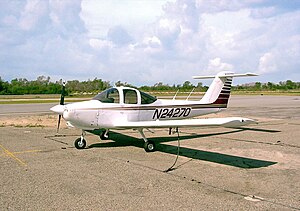
According to Wikipedia: The Tomahawk was Piper's attempt at creating an affordable two-place trainer. Before designing the aircraft, Piper widely surveyed flight instructors for their input into the design. Instructors requested a more spinnable aircraft for training purposes, since other two-place trainers such as the Cessna 150 or Cessna 152 were designed to spontaneously fly out of a spin. The Tomahawk's NASA[1] GA(W)-1 Whitcomb airfoil addresses this requirement by requiring specific pilot input in recovering from spins, thus allowing pilots to develop proficiency in dealing with spin recovery.

After the first spin, we leveled out and I could not catch my breath. Huh. Huh. Huh. My instructor (the one who used to chuckle if we messed up) said, "Lynda, c'mon breathe. Stick with me here."

Once I caught my breath, we did it again. Only a tiny bit of hyperventilating. Then again. No hyperventilating. Then again, and again, and again, until I could enter the spin and recover on my own with no interference from the instructor.

I am *really* looking forward to spins again.

Next post we'll talk more about the advice I've been getting. As always, comments are appreciated. Keep 'em coming!

Wednesday, January 20, 2010

Student Responsibilities

Ok, I have to tell on myself here. I've spent two days focusing attention on my Army instructors for their performance, but we students have a responsibility, as well, and that's to let our instructors know what's going on in our heads. This question brought back a memory...

Which statement is true regarding the achievement of an adequate standard of performance?

A flight instructor should devote major effort and attention to the continuous evaluation of student performance.

Flight instructors can affect a genuine improvement in the student/instructor relationship by not strictly enforcing standards.

Flight instructors fail to provide competent instruction when they permit students to partially learn an important item of knowledge or skill.

The answer is C. I thought about a concept in my primary training (the first phase of Initial Entry Rotary Wing - IERW) that I didn't grasp initially that haunted me in subsequent training. And I mean for a long while. Even to this day I can't remember what the name is for this technique, so any of you instructors out there are welcome to comment below with the correct name.

This integral knowledge that I never fully grasped was that concept of being able to see where you were going to touch down in the helicopter and maintain a constant angle of descent to it, achieving a stabilized approach. I remember it being explained to me that it was some kind of "cone of action" or movement or something or other.

The idea was that you were supposed to be able to look at your intended landing point ( end of a runway or section of a field, etc.) and see no movement at that particular point. However, everything around that point should be moving (albeit minimally). Things in front would be moving forward, things to the side should be moving farther out, and things behind should be moving backward. If you got this concept, which I hadn't, you would be able to maintain a constant descent angle through out your approach and landing, preventing you from under or over arcing from the straight line that could ideally be drawn from your point of initial descent to your touchdown point (possible action for under arcing= add power, over arcing = subtract). Pictures (and a more thorough explanation) at http://www.copters.com/pilot/na_picts_jpeg.html

Obviously, this is a purely visual maneuver and would take, for example, just small corrections in power if the target settings were hit straight off. But, if you (or me, in this case) never understood this concept, too large corrections would be made too late and increase the possibility that I talked about in my last post, where the instructor got back to the table and said, "you were too high on the first one, too slow on the second," etc., and never a stabilized approach would be achieved.

I was working way too hard trying to cover up my ignorance when I should have just admitted my confusion. I'm not sure when the light bulb went on in my head, but once it did, it solved a multitude of problems and let me focus on the real subject of the lesson at hand.

FoMI, pt. 2

This morning I did another iteration of the Fundamentals of Instruction exam. [And to answer your question, I am still far FAR from getting 100%.] When I read the question: "When an instructor critiques a student, it should always be..."

Unfortunately, the online test was being difficult and wouldn't let me easily copy the choices, so I'll just jump ahead and tell you that the answer was, in effect, to conduct the critique immediately following the lesson. One of the results of that experience with my first Army flight instructor I told you about last time is that I was switched to a new one after my original instructor went on vacation.

What led to this change? Because when I didn't have his presence in the left seat (the primary flight position in a helicopter is in the right, remember?) and an instructor over there who didn't scream at me, I did great. We flew with this substitute instructor pilot for a week and I not only caught up with everyone else, I exceeded the standard for that phase of instruction.

The day my instructor got back, I was supposed to FINALLY solo (in a helo that means you fly with your stick buddy in the other seat - technically not really alone), but the winds exceeded the limits. So Screamerman instructed me to fly back to our home airfield. I picked up to a hover, departed the traffic pattern, flew back to home station, made an approach, came to a hover, taxied onto the ramp, and set the huey down in a confined space and shut 'er down - without him saying a word. I will never forget the slack jawed look my instructor gave me, and the disbelieving praise he then offered.

The next day, however, as I had been conditioned, I flinched every time I knew I had done something wrong, even though the instructor wasn't (had promised not to) yell. Too late. Flinch, quake, fumble. Fail.

So, again, Marty the stick buddy to the rescue. I was too cowardly to "give up" and demand another instructor so he went to bat for me. Again, it was the Army. Tough it out, soldier! The funny thing was, the NEW instructor I was assigned had adopted a technique of not immediately offering a critique. He would remain silent the whole flight session until we returned to the table and then say, "You were too fast on the first approach, too high on the second, didn't put enough wind correction in on the third," etc. How useless was that information? Not only did I have no recollection of these individual approaches, it also wasn't allowing me to make the corrections when I could have seen the results! I eventually soloed, which it seemed I would never do, as you can see in the photo to the left.

What a struggle. Yet I made it through and learned a lot in the process. The instructors I had in later phases were just fine, but I probably still would have been reluctant to request a change. Doing so the second time might have labeled me a "troublemaker." Don't want to make those waves... Luckily, in the civilian world, you don't have to worry about that. It's your money, take charge of your training! Get what you pay for!

What else did I learn from my flight training? Not just how to be a pilot, but also some real world applications (which I will continue to share) for some of these concepts in the test.

Except for questions like this:

Affective domain relates to

O
attitudes, beliefs, and values.
knowledge.
physical skills.

I'm not sure, but don't show this question again
I'm sure, don't show this question again

You're darn tooting, I'm not sure. What in the world does this have to do with anything?!?

Tuesday, January 19, 2010

Fundamentals of MY Instruction

As I begin studying for my CFI written, I am reminded of my experiences with my own training to be a pilot. I dreamily read the Fundamentals of Instruction (FOI), a 193 question test that I must complete before the flying portion of the training. I imagined myself guiding my students to great heights and achievements as I molded their willing minds. And then I took a practice test on www.webexams.com. I scored a 74 out of 100. Well, ok, I can't expect to be perfect first time around. So I took it again today. 72 out of 100. Either I'm regressing or I'm hungry. I'll take the second option, as I have learned from the FOI that students must have their basic needs met first and I really need to go get some groceries.

Anywho, I read with interest question #99: A communicator's words cannot communicate the desired meaning to another person unless the
a. words give the meaning that is in the mind of the receiver.
b. listener or reader has had some experience with the objects or concepts to which these words refer.
c. words have meaningful referents.
Any guesses? I'd rule out the one with the word "referents." I've never even heard of that word before. And if the receiver already had the meaning in their mind, they wouldn't need an instructor, would they? So that leaves b, which is pretty obvious anyway.

This reminded me of my flight training days back in the Army. My instructor (a Vietnam vet, now Department of the Army civilian) was a screamer who was not satisfied unless I left the helicopter crying (I'm pretty sure the FOI would say this would have been needed to be stated in the learning objectives, but I digress).

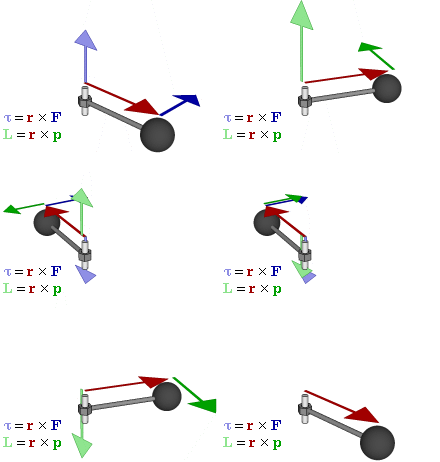
The briefing table was not much better. The prebrief consisted of introducing new concepts of rotary wing flight that we would see demonstrated in the Huey. Sounds fair, right? I still remember one day that we sat down at the table and first thing my instructor says to me totally out of the blue, "A pound of torque equals five knots or 100 feet per minute." I stare back blankly. So he says it again. "A Pound Of Torque Equals Five Knots Or 100 Feet Per Minute." I got nothing. So he asks my stick buddy (as we called my training partner in those days - love ya, Marty, wherever you are), "do you understand me?" "Yes," says Marty, "but I majored in Aeronautical Engineering (or something similar)." [I can only assume my degree in History is why the question was directed toward me in the first place.] Screamerman wasn't listening. So, again, he repeats, "A POUND OF TORQUE EQUALS FIVE KNOTS OR 100 FEET PER MINUTE." This time so the whole room could hear how much trouble he was having getting through to me. [visual aid (the use of which is highly stressed in the FOI) from http://en.wikipedia.org/wiki/Torque]

I finally said to him something to the effect of "You know, you could be speaking Greek for all the sense those words are making to me. And saying it louder is certainly not going to make it any more clear." There was probably a sniff in there too. Then, and only then, did he explain that the power applied to the main rotor was measured in pounds of torque (force rotating around an axis) and an increase in this force could either manifest itself as an increase in airspeed (measured in knots) or a climb (in feet per minute). Or something like that.

Now. Wasn't that easier? Less hostile? Much more effective?

The good thing is that I made it through flight training. Yes, I struggled with the basics, but by the time we were in the practical application phase (Basic Combat Skills) I had no worries whatsoever. The residual effect of this method of training, though (yeah, I know, it WAS the Army), was that when I messed up in the helicopter, I would scream at myself. My first airplane instructor (also ex-military) chuckled every time we students messed up. Laid back, calm, constructively criticizing. I much prefer the latter, wouldn't you? My students won't have to choose; I don't have much of a voice for screaming anyway.

Sunday, January 03, 2010

Furlough is now official.

I started this blog entry on what was officially my last day as a pilot with NetJets. I know that I used that designation a couple of times, but I previously was referring to my last day flying with them, then the last day of my tour, then January 16th, which was my official furlough day (I will have another 'last day' - that day that my pay and benefits end).

This has been a rough time. I've never been furloughed before so I am wading through a bunch of paperwork - trying to figure out all of the ins and outs of "pausing" employment, like getting my vacation days and PTO (personal time off) paid, filing my last expense report, updating my standing bid and contact information (when we get recalled I only have 7 days to respond - don't want "undeliverable mail") and sending my stuff (like my crackberry and ID) back to the company. Sunday I registered for Ohio's unemployment benefits - surprisingly a not too difficult task. I only wish that my unemployment check would exceed the amount of my mortgage - government doesn't want us to get too comfortable sitting on the couch eating bon-bons I guess.

That being said, I am so lucky in that I am being furloughed instead of my company going out of business. If they had, I would not have access to COBRA, which will allow me to continue medical and dental benefits during this time and I would not have the job to look forward to going back to. Any pilot will tell you, now is not a good time to be looking for a flying position, so I expect to be able to have quite a bit of time working on Girls With Wings -- and there is a lot to do!

One of the projects I am working on in this new venture with Girls With Wings as a non profit is to gain tax exempt status with the IRS. This is the infamous 501(c)(3) status will allow tax deductible contributions to the organization.

But just like any IRS form, it is long and convoluted. I am having to answer questions like: "Have you ever or will you ever, act, think, or plan to do any of the following activities or anything resembling such actions as it pertains to a past, present, or future endeavor your organization undertakes or is even remotely considering participation? If so, who will be responsible for these events and in which way are they qualified? Include any publicity methods and materials along with the specific criteria under which you will take part in said activities...." Or something quite similar to that. Sheesh. They do not make it easy. But then again, no one wants a impostor organization skimming funds for vacations to Europe, either. I would love to hand this off to my assistant, but.... I don't have one. [Applications for this unpaid position are being gratefully accepted.]

Another top priority? Getting my CFI/CFII/MEI. More on that next time...

Saturday, January 02, 2010

Should that be "Life on the ROPES as a Pilot?"

For those readers of this blog that haven't heard yet: I am going to be furloughed this month from NetJets. Boo. I am completely bummed about this because I do believe that NetJets is about the best flying job out there to be found (and I've been a military, commercial airline and fractional pilot). However, in addition to working my 7 day tours earning my living, Girls With Wings (which sucks that salary back out again) has always kept me so busy on my days "off" that after 7 days at home I was ready to go back to "work" flying my beloved Citation X.

Frankly, I'm pooped.

In a way this furlough is very timely. There is so much potential with Girls With Wings - now a non profit organization officially (though it hasn't made a dime in its six years anyway) with 501(c)(3) status pending (or at least whenever I can finish that bleeping IRS paperwork) that I can finally take advantage of!

And so, as of mid January, I will be shaking the trees to find sources of revenue for Girls With Wings in the form of grants, sponsorships and donations so I can pursue the many many ideas for GWW. Meanwhile, I have to also be covering my mortgage because very few people will give money to homeless people. I mean, they do... but panhandling has never been my forte.

And though I could try to find another job and still work on GWW in my spare time, I just don't see my being able to grow the organization - as the situation seems to demand. Already I think people may be getting frustrated with thinking about the mission of Girls With Wings: "using women in aviation to inspire girls to achieve their full potential," and think yeah, but HOW are you doing that? I know I do. So many ideas; so little time.

Already I have had some amazing women(and men) raise their hands to help out. Folks are compiling events for the Penelope Pilot Project and resources for the presentations, asking for scholarship donations, creating informational multi-media materials, writing for the new Penelope's Page, etc. I know people out there want to assist me in our mission, but it takes time for me to get them into a position to be able to do so. Hours that right now I don't have.

So, what am I going to do to keep Mr. Ci T. Mortgage off my case? Start flight instructing. Yeah, I know, I know. There's, like, NO money in instructing. Plus, you're talking to (or reading about) a woman who went right into the Army's Flight School and flew helos and King Airs for seven years. Then went right into the regional airlines flying Beech 1900s and then got jet jobs with Flight Options and NetJets. So even though I have approximately 5000hrs (time to update my logbook, I should think), I have barely any single engine time. And even less flying around the pattern, flight following, VFR cross-country time. Which is what I'm going to be instructing in. Ha.

I am a curious case for sure. Most people get their basic certificates: private, instrument, commercial, and then instruct til they can get an airline job. I've had the airline job, now I have to turn around and get training as a student pilot. No kidding. How in the heck am I going to land an airplane that can't fly as fast as the speed my current airplane lands at? Chandelles? Lazy 8s? Uh... what?

p.s. am totally NOT looking forward to spins again.

Luckily I met up today with a highly recommended local instructor who is willing to take on the challenge of teaching me. He also, strangely enough, has more confidence in me than I think healthy at this point. He has told me what to study and what written tests to take first. Then we'll start the flying portion in order to become a CFI: Certified Flight Instructor, CFII, a CFI that can train students in instruments, and MEI: a multi engine airplane instructor.

I am really excited at the prospect of being an instructor. I don't know how many students are available out there right now, but I think I will bring an unusual perspective to the syllabus. As a pilot who has been out there in the real world flying a variety of missions, I hope to be able to impart some insight to my students. And, truth be told, I'm a little rusty on some of the fundamentals. I could use a little refresher myself. And there's no better way to learn than to teach.

I'm sure some of you reading this are a bit confused by some of the terminology I have used. My goal is to bring you along as I go through my training so you will know by the time I get signed off. [Especially since I won't have stories of my jet-setting lifestyle for SOME time to come.] Then I can share my experiences of flight instructing, too. My deadline is set for May. That's a little vague, but I've got to figure out exactly how much I will be on the road the next few months to fit in the flight portions. I think May is completely reasonable to complete all my ratings. First I have to start studying for the writtens.

I'm also looking into ways to fund this training, which will probably cost about $2000. Some of my options appear to be 1. GI benefits (which I kinda think I'm not eligible for anymore) 2. State Unemployment Funds (I understand Ohio is not too willing to pay for pilot training since, obviously, aviation is not exactly a "growth industry" these days) 3. Sponsorship (from companies and organizations willing to do a little cross-promoting of getting more women interested in pursuing flight lessons).

If you're intrigued with any of this, please leave your comments, questions and suggestions on the blog. I would love to hear them because I would like to know what you'd like to hear about as well.

2010 is going to be great. Happy New Year!